Last updated November 22, 2026
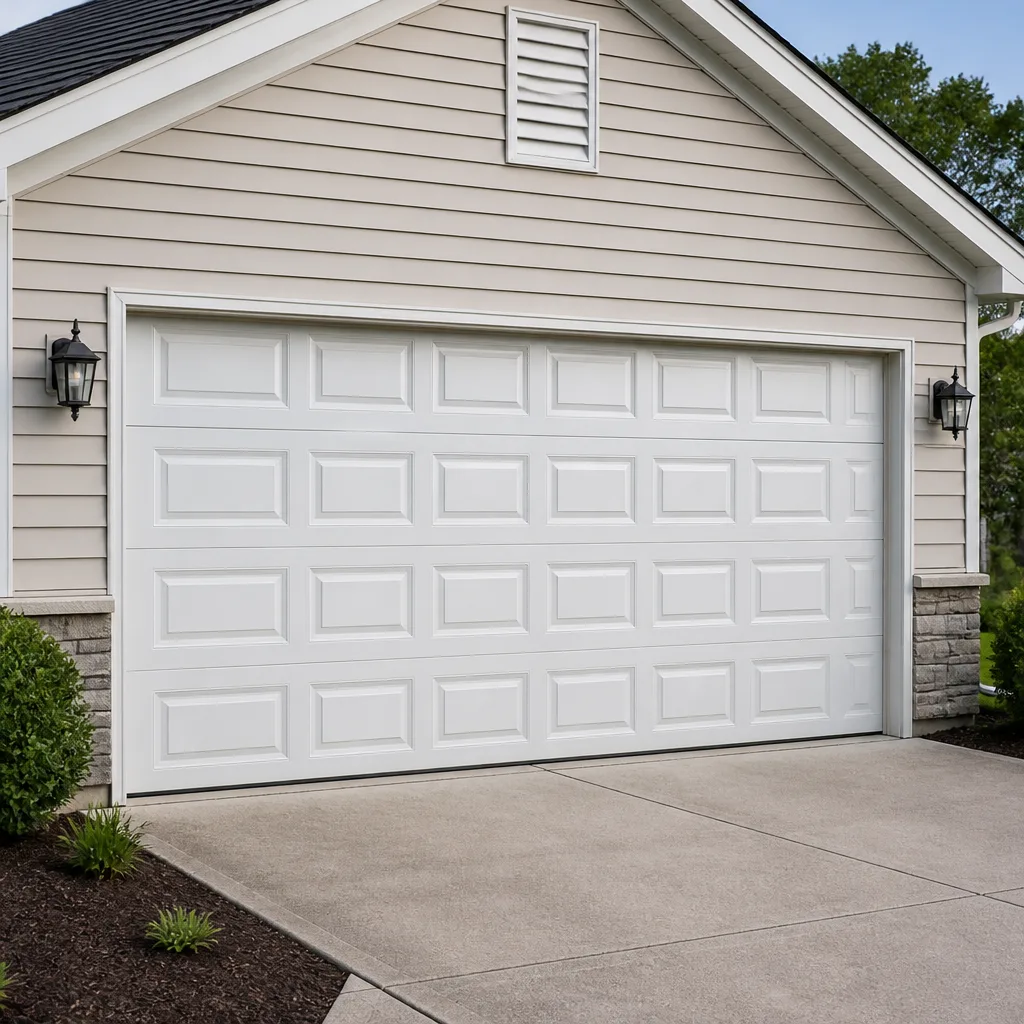 Raised-panel steel
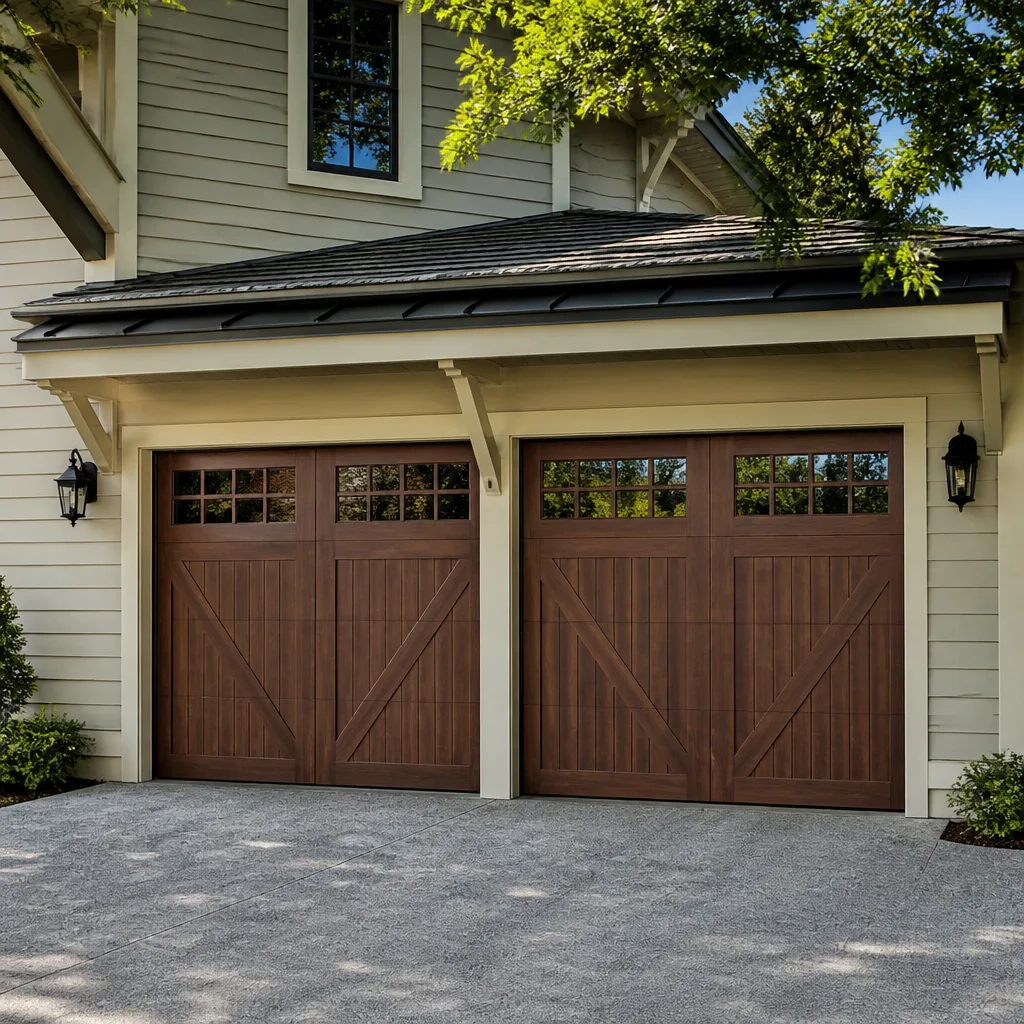 Carriage house
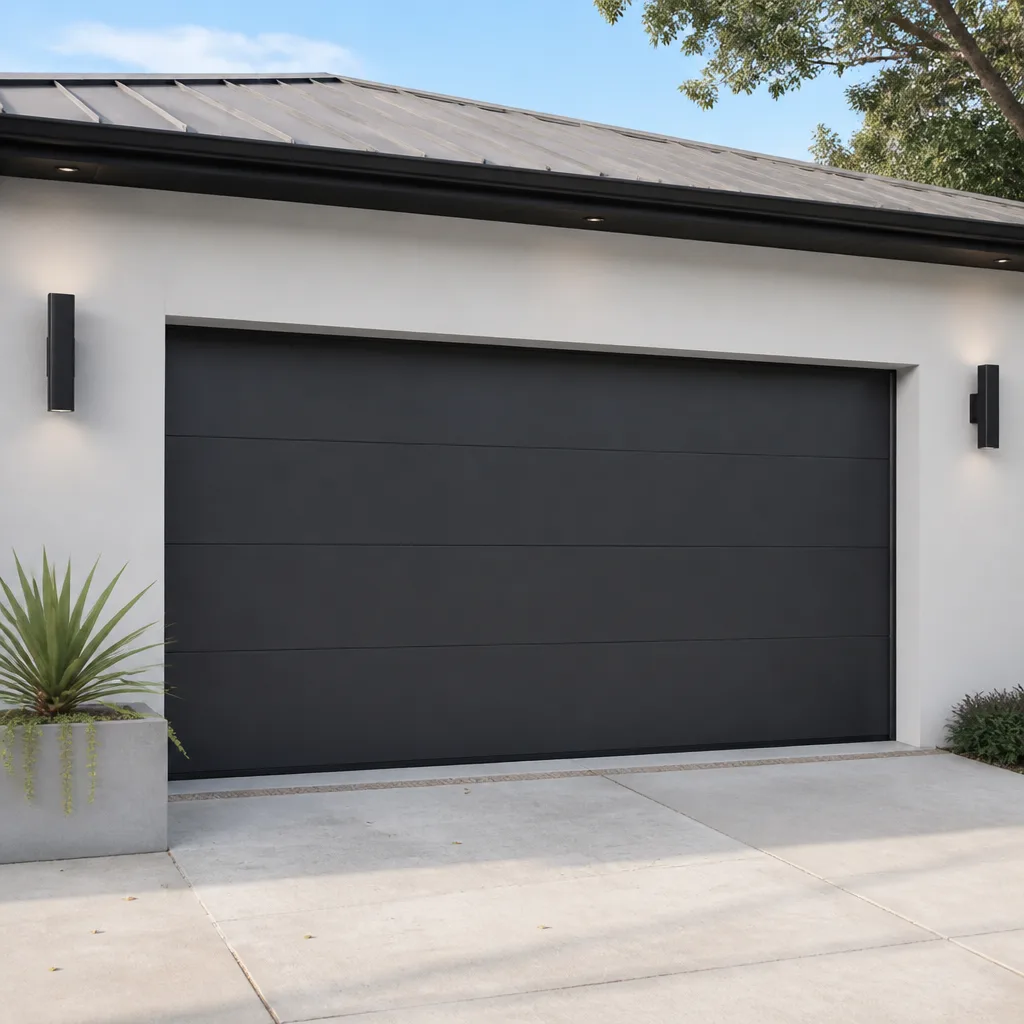 Modern flush
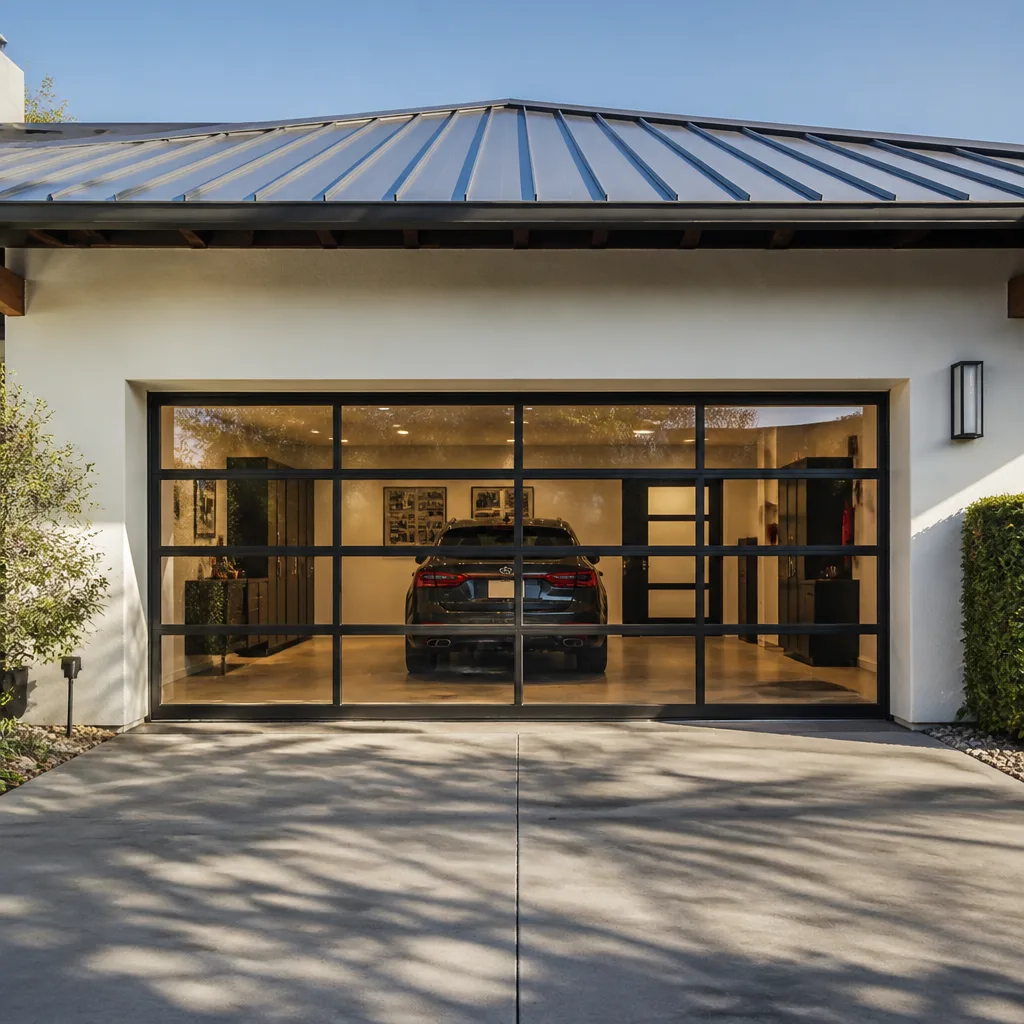 Full-view glass
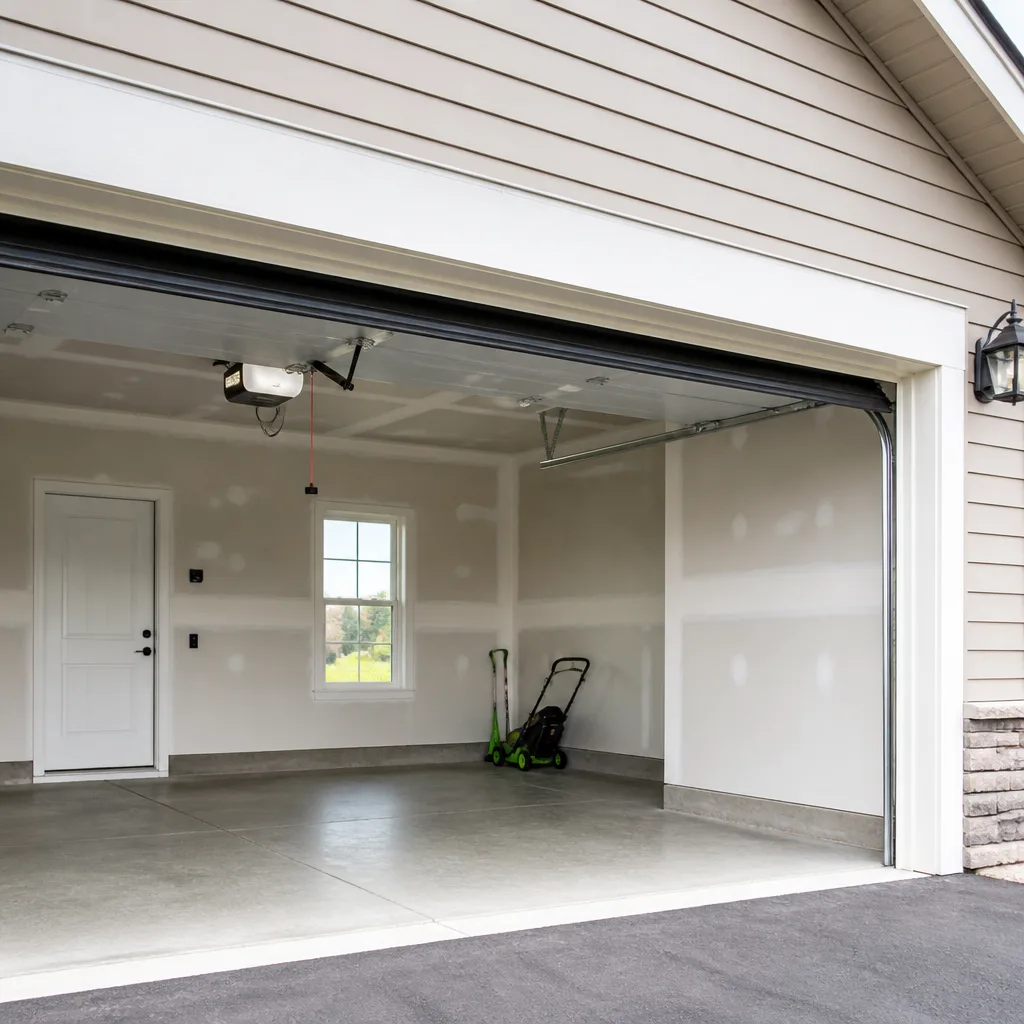 LiftMaster openers
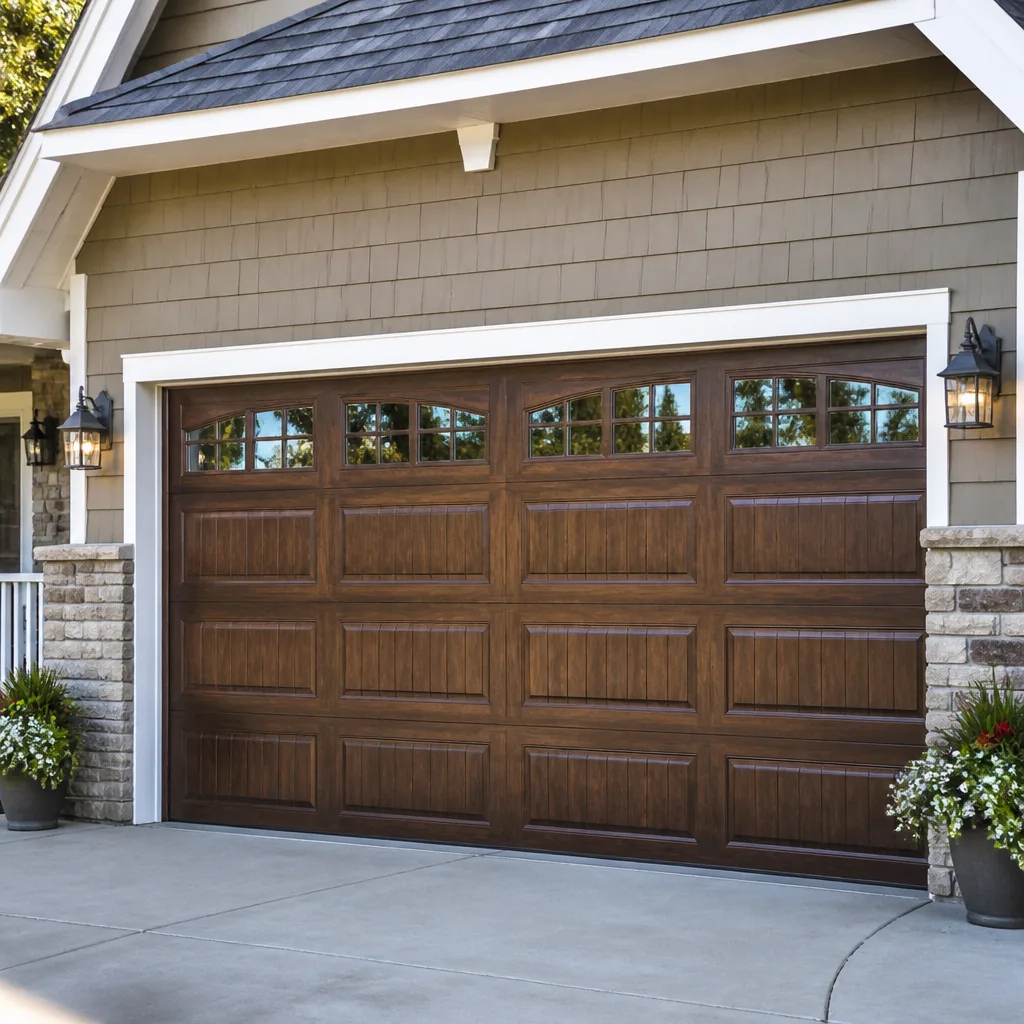 Chamberlain openers
Full 25-point door and opener safety check with every visit - springs, cables, rollers, tracks, and your LiftMaster or Chamberlain opener included
You get a price before we start. It does not change when the pro arrives.
Get your free estimateThe Complete Guide to Garage Doors in Cherry Creek
A surprising number of garage door calls we get from Cherry Creek aren’t about broken doors. They’re about doors that were spec’d for the wrong house type from the start. A panel that looked right in a showroom gets ordered for a shallow 1950s garage and never seats properly. An opener sized for an attached suburban garage gets bolted into a detached Cherry Creek North structure with no climate control and the wrong spring tension. The door works, technically, then starts wearing out two years early. This guide walks through how Cherry Creek’s actual housing stock, HOA rules, and neighborhood expectations should drive every garage door decision – spring system, headroom, opener, material, and style – before you look at a single catalog page.
Quick Answer
Garage door decisions in Cherry Creek should start with the house, not the door. Pre-1980 ranch homes and older Cherry Creek North carriage-style garages usually have shallow headroom, low clearance, and detached structures that demand a specific spring system and opener type before style enters the conversation. Newer infill townhomes and luxury builds follow HOA design guidelines that dictate panel style, color, and window configuration – so homeowners need to confirm those rules and measure actual clearance before ordering anything. Our technicians have up to 12 years of experience across eight major brands, and the pattern holds: the fit problems we fix trace back to skipping the measure.
Styles & brands we work with
- Raised-panel steel
- Carriage house
- Modern flush
- Full-view glass
- LiftMaster openers
- Chamberlain openers
Table of Contents
- How Cherry Creek Housing Stock Dictates Your Garage Door System
- The Measurement Everyone Skips (And Why It Causes Fit Problems)
- Spring Systems in Cherry Creek: Torsion vs. Extension
- Opener Types That Actually Fit Cherry Creek Garages
- HOA Design Guidelines: What They Really Prohibit
- Detached Garages and the Insulation Question
- Brand and Material Tiers for Cherry Creek Price Points
- Repair or Replace? The Decision Tree
How Cherry Creek Housing Stock Dictates Your Garage Door System
Cherry Creek isn’t one market. It’s at least three, and each one pushes you toward a different garage door setup before you ever pick a color.
- Pre-1980 ranch homes: Common across the neighborhood, these garages were built when a 7-foot door was standard and headroom was whatever the framer left. Many have low clearance above the door track, which rules out certain high-lift and side-mount configurations. The framing is also usually solid, so retrofits are straightforward once you know the measurements.
- Newer infill construction: Taller openings, deeper garages, and often a second bay. These builds can handle 8-foot doors, high-lift tracks, and jackshaft openers mounted to the side of the torsion bar. The constraint here is usually HOA approval, not structure.
- Cherry Creek North carriage-style and detached garages: Narrow, sometimes shared-wall, frequently detached from the house. Door width is often 8 or 9 feet rather than 16, and insulation matters more because there’s no conditioned space on the other side.
We’ve seen the same mistake repeatedly: a homeowner shops by style and material first, then discovers the door they want won’t fit the opening. The fix is order-of-operations. In Cherry Creek, you start with structural measurements, then spring and opener compatibility, then HOA rules, and only then aesthetics. When a door needs to be replaced rather than adjusted, our garage door installation process builds the spec from those measurements outward.
The Measurement Everyone Skips (And Why It Causes Fit Problems)
Headroom – the distance from the top of the door opening to the ceiling – is the single measurement most homeowners never take, and it’s the one that causes the majority of post-installation fit problems in older Cherry Creek openings. Here’s why it matters and how to check it before you buy.
- Measure the opening width and height at three points each (left, center, right for width; left, center, right for height). Older garages are rarely perfectly square, and a half-inch of variance changes what fits.
- Measure headroom from the top of the opening to the lowest obstruction overhead – not just to the ceiling, but to any ductwork, beam, or pipe that sits in the door’s path.
- Measure backroom – the horizontal distance from the door opening to the back wall. This determines whether a standard track or a low-clearance track is required.
- Measure side room on both sides of the opening, especially if you’re considering a jackshaft opener that mounts beside the torsion bar.
A standard torsion system needs enough headroom for the drum and torsion bar above the door. When that space is tight, you go to low-clearance track, low-headroom springs, or a different opener entirely. None of those options are bad – they’re just wrong if you order a door spec’d for a 12-inch headroom garage and yours measures 8.
Spring Systems in Cherry Creek: Torsion vs. Extension
Torsion springs mount above the door on a bar and do the lifting work through cable drums on each side. Extension springs stretch along the horizontal track. Most Cherry Creek garages with a single 7-foot door – the classic 1950s to 1970s configuration – run torsion, because it’s more durable and handles heavier doors. Narrow carriage-style garages sometimes came with extension springs originally, which means the replacement decision is really a re-spec.
Two things to know before you touch a spring:
- Springs carry extreme tension. A wound torsion spring stores enough energy to cause serious injury if it releases unexpectedly. This is not a job for a homeowner with a wrench and a video. Our technicians handle spring replacement as a routine service because it’s high-risk and easy to botch.
- Springs are matched to door weight. Replacing a spring with the wrong gauge or wind count shortens door life and strains the opener. On an older Cherry Creek door that’s been repainted or re-paneled, the weight may no longer match the original spring spec.
If your door is heavy to lift, slams down, or you hear a loud crack, stop using it and call. For general diagnosis, our garage door repair team handles springs, cables, rollers, and track in one visit. Springs, openers, panels, and full installs are all one call.
Opener Types That Actually Fit Cherry Creek Garages
Opener choice follows the garage, not the marketing. In Cherry Creek, three configurations cover almost every situation.
- Belt-drive openers are the quiet choice for attached garages – the ones where a bedroom sits above the garage or the door shares a wall with living space. In newer infill townhomes, a belt-drive unit is the difference between a quiet bedroom and a wake-up call at 6 a.m. Chamberlain and Genie both make belt-drive models that fit standard residential setups.
- Chain-drive openers are the durable standard for detached garages where noise doesn’t matter. Fewer moving parts, less to go wrong, and they handle heavier doors well.
- Jackshaft (side-mount) openers mount beside the torsion bar and free up overhead space. On Cherry Creek North garages with low headroom, a jackshaft can be the only practical option. LiftMaster is the go-to here, and our technicians know the calibration differences across models.
Smart features – Wi-Fi, app control, battery backup – are worth it if the garage is attached and you want to check the door from your phone. On a detached Cherry Creek garage used for storage, basic remote and safety-reverse is usually enough. If your current opener is grinding, reversing for no reason, or losing its programmed remotes, our garage door opener repair service starts with a brand-specific diagnosis. Knowing the system before we arrive saves a return visit.
HOA Design Guidelines: What They Really Prohibit
HOA design review in Cherry Creek North and the surrounding enclaves is real, but the rules are narrower than vendors often claim. The pattern we hear is a homeowner being told by a door seller that “the HOA won’t allow that” when the actual restriction is far less restrictive. Here’s how to separate fact from folklore.
- Get the written covenant. Request the design guidelines document from your HOA directly, not from a contractor’s summary. The document itself is the authority.
- Check whether the rule is style, color, or material specific. Many HOAs restrict color families and visible window configurations but say nothing about panel style or material. Others care only about uniformity on streets with shared facades.
- Check whether your home is actually in the HOA. Not every Cherry Creek property falls under a covenant – detached garages on older lots often don’t.
- Submit for approval before ordering. Design review timelines vary, and a custom door that arrives without approval is an expensive problem.
What most Cherry Creek HOAs actually care about is that the door doesn’t look incongruous with the street – a bright modern panel on a 1960s ranch, or a distressed wood-look on a new luxury townhome. Match the era and the rules usually pass. When in doubt, a neutral steel door in a standard color with a matching window row clears most design reviews.
Detached Garages and the Insulation Question
Detached garages are common across Cherry Creek, and they change the insulation and weatherstripping calculation in ways that attached-garage owners never think about. In an attached garage, the door is one wall of a space the house’s heating and cooling partly protects. On a detached Cherry Creek garage, the door is the dominant exterior surface, and the garage’s interior temperature is whatever the outside air is doing.
What that means in practice:
- Insulated doors pay back faster on detached garages. A double-layer steel door with polyurethane or polystyrene core keeps the space usable in Denver’s cold snaps and summer heat.
- Weatherstripping does more work. The bottom seal, side seals, and top seal are the only barrier against snowmelt, wind-driven rain, and cold air. Worn bottom seals let mice and cold air in together.
- Condensation is the enemy. An uninsulated steel door on a detached garage in a Denver winter can sweat on the inside, rust the bottom panel, and warp the seal. Insulation solves most of that.
- Openers on unheated garages need cold-rated lubricant. Standard grease thickens at low temps and strains the motor. It’s a small detail that extends opener life through Cherry Creek winters.
If your detached garage door is used daily, insulation is the single highest-value upgrade. It costs less than a full replacement and handles the temperature swings that Denver’s front-range climate delivers.
Brand and Material Tiers for Cherry Creek Price Points
The temptation in a neighborhood with Cherry Creek’s price points is to over-spec a residential door. That’s the wrong move. A 16-by-7-foot residential door on a two-car garage doesn’t need the commercial-grade hardware a luxury listing’s marketing copy implies. It needs a strong panel, a matched spring system, and a reliable opener. Here’s how the tiers line up.
- Entry-steel tier (Clopay and similar): Single-layer steel, solid color, basic window options. This is the right fit for pre-1980 ranch homes in Cherry Creek where the door is functional and the street context is modest. Add an insulation layer and you’re at a real upgrade over builder-grade without overspending.
- Mid-tier insulated steel (Amarr, Clopay premium lines): Two or three layers with a polyurethane core, short or long panel options, and window configurations that match 1960s to 1970s facades. This is the sweet spot for detached garages and most Cherry Creek streets.
- Premium/architectural tier: Full-view aluminum, carriage-house raised-panel, or wood-look steel. This tier makes sense where the HOA requires it and the house price supports it – luxury townhomes and newer infill builds. On a 1960s ranch it looks out of place and costs more than it’s worth.
Opener tiers follow the same logic – a basic Genie or Chamberlain chain-drive for the detached garage, a belt-drive LiftMaster or premium Chamberlain for the attached one. We work on all eight major brands: LiftMaster, Chamberlain, Genie, Clopay, Amarr, Wayne Dalton, Craftsman, and Raynor. If you’re sourcing parts to match an existing door, our in-house parts supply cuts the wait that a manufacturer back-order creates. The full range of Garage Door Repair Cherry Creek services covers everything from a single spring to a complete new door.
Repair or Replace? The Decision Tree
Homeowners often ask us to help decide, and the answer comes down to five factors. Work through this list before you get a quote on either.
- Age and structural condition of the door. Surface rust on a panel edge is a repair. Rust creeping into the bottom two panels at the seams usually means replace. A bent door track often means replace the track and inspect the door; deformed panels mean a new door.
- Frequency of breakdowns. One repair in a decade is a repair. Three repairs in two years points to a door that’s reached end of service.
- Opener age and compatibility. An opener that predates modern safety-reverse and photo-eye sensors is worth replacing for household safety, even if it still runs.
- Fit for your particular Cherry Creek garage. A door that’s been wrong for the opening since day one – too heavy for the springs, wrong profile for the headroom – never quite works, and replacing it with the correct spec is the only real fix.
- HOA design cycle. If the HOA is about to update guidelines, or you’re planning an exterior refresh, a door replacement fits naturally into that window.
Our honest default is repair when the door has structural life left. That’s not a sales position – it’s the cheaper call for the customer and the one that holds up. When the door is genuinely done, we quote a replacement built from the garage’s actual measurements.
Common Mistakes to Avoid
- Shopping by style before measuring the opening. The single biggest source of post-installation fit problems in Cherry Creek is a door ordered before the opening was measured three ways. Take width, height, and headroom first, then shop.
- Taking an HOA ruling from a door seller instead of the covenant. Vendors often quote “the HOA won’t allow that” without ever reading the guidelines. Get the document yourself; the rule is usually narrower than the rumor.
- Over-specifying for a residential two-car door. A Cherry Creek ranch doesn’t need a commercial-grade door. Buy the tier the house supports and put the savings into a matched spring system and a better opener.
- Attempting a spring replacement yourself. Torsion springs are under extreme tension. The injuries we hear about come from this exact job, done once, by someone who watched a video. Leave it to trained technicians.
- Skipping insulation on a detached garage door. In Cherry Creek, most detached garages are unheated. A single-layer steel door sweats, rusts, and warps its bottom seal within a few Denver seasons. Insulation is worth it.
- Ignoring the weatherstripping until it fails. Worn bottom and side seals let cold air, snowmelt, and small animals in. They’re the cheapest fix and the first thing to check if your garage stays cold in winter.
- Replacing an opener without checking the door first. A door that binds or jumps often makes a perfectly good opener look broken. Diagnose the door and springs before buying a new motor.
See the difference
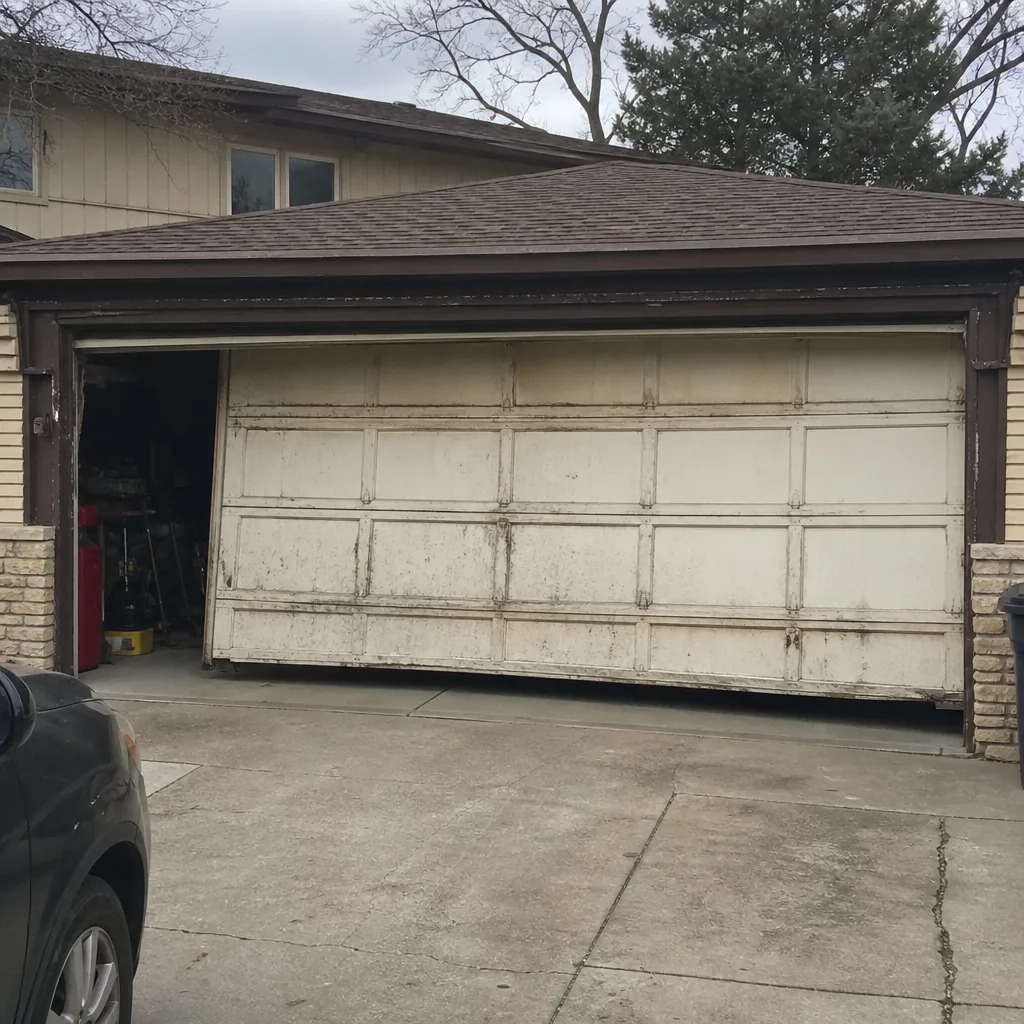 Before
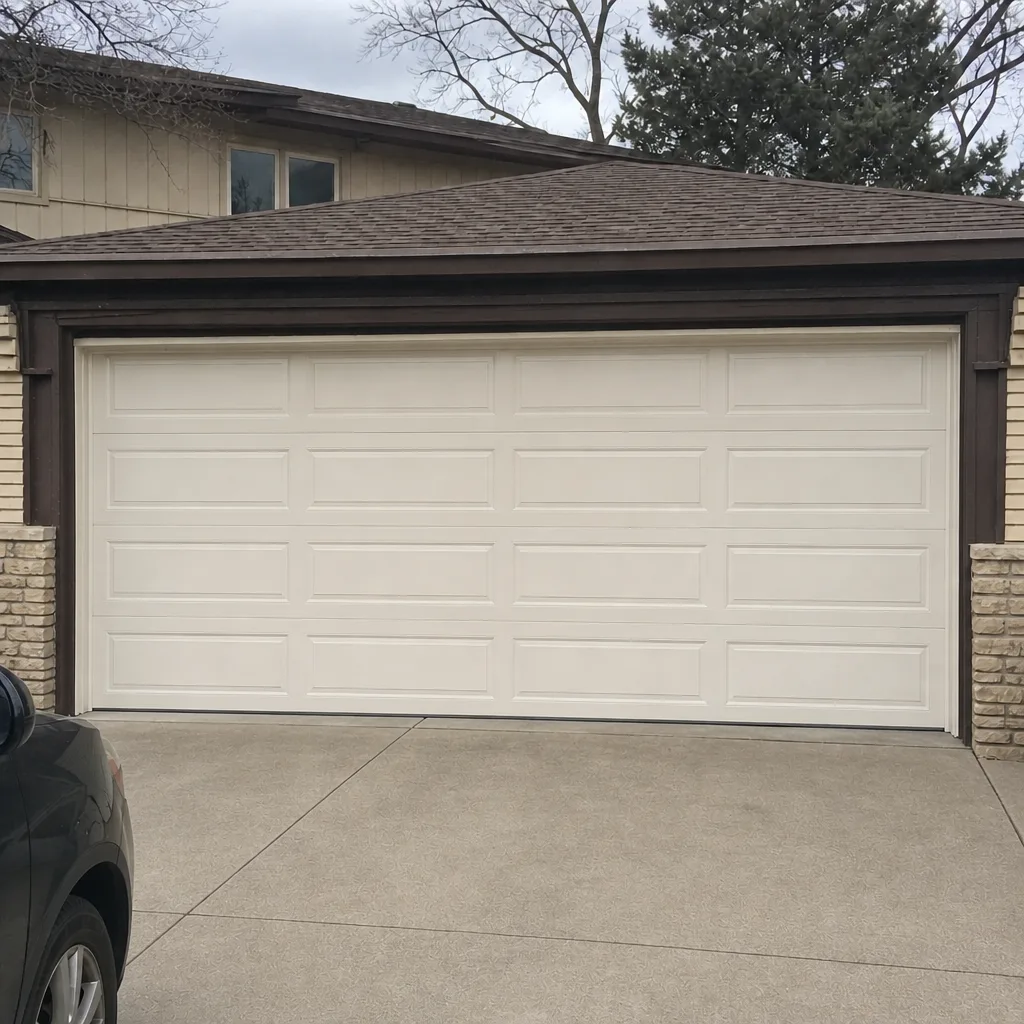 After
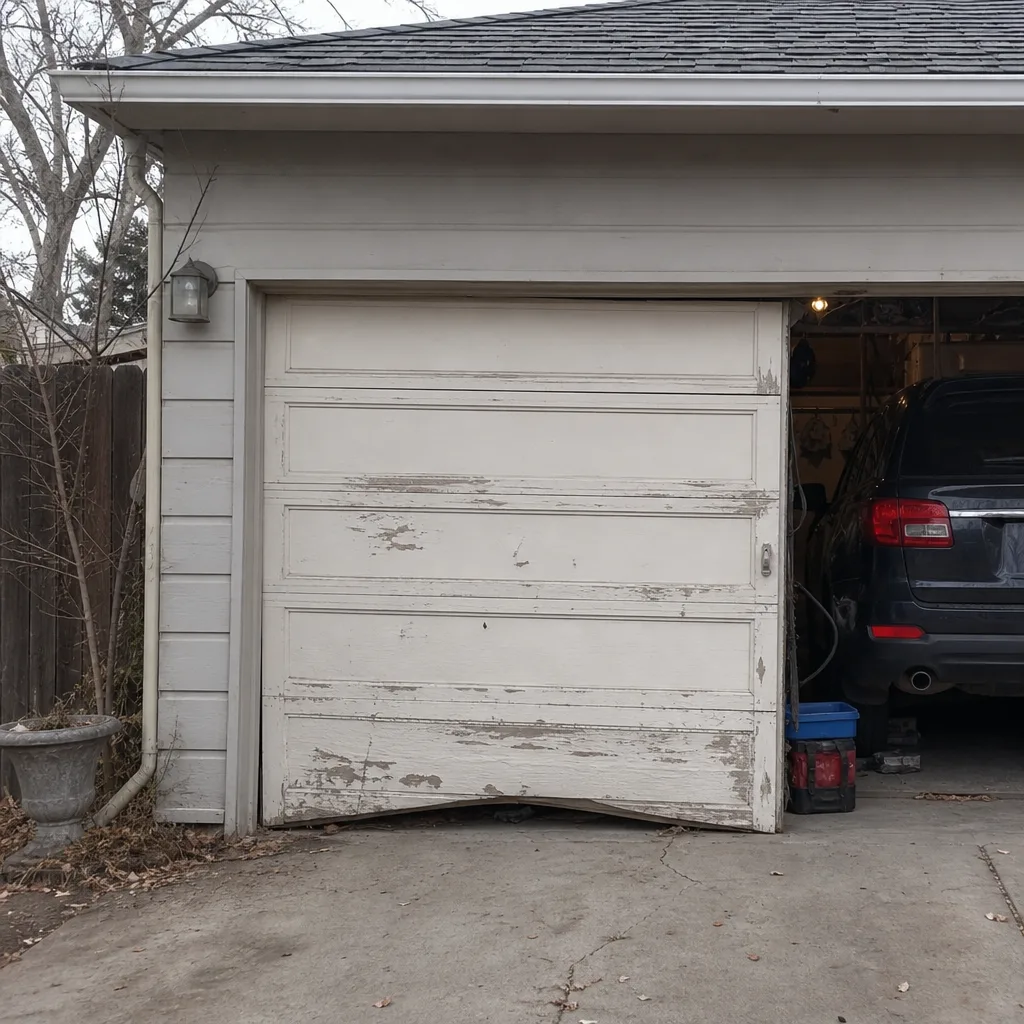 Before
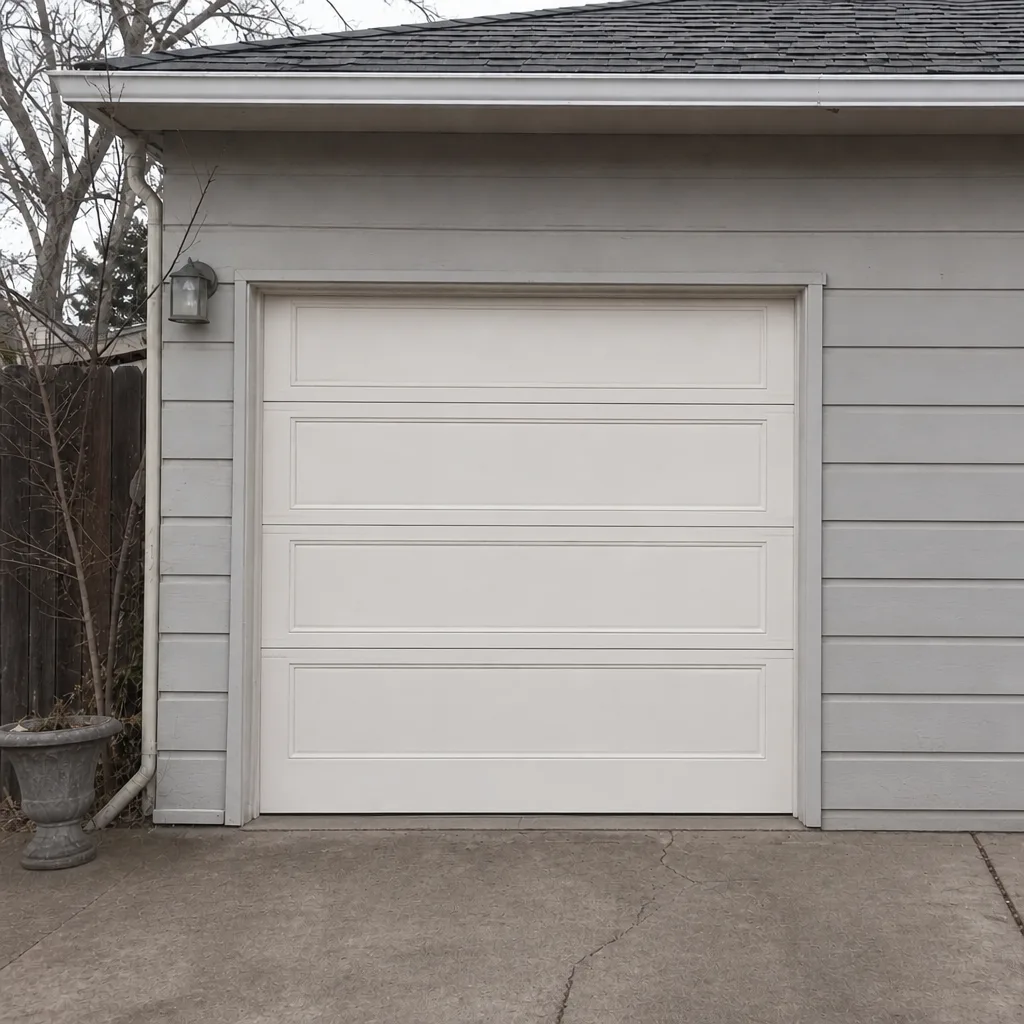 After
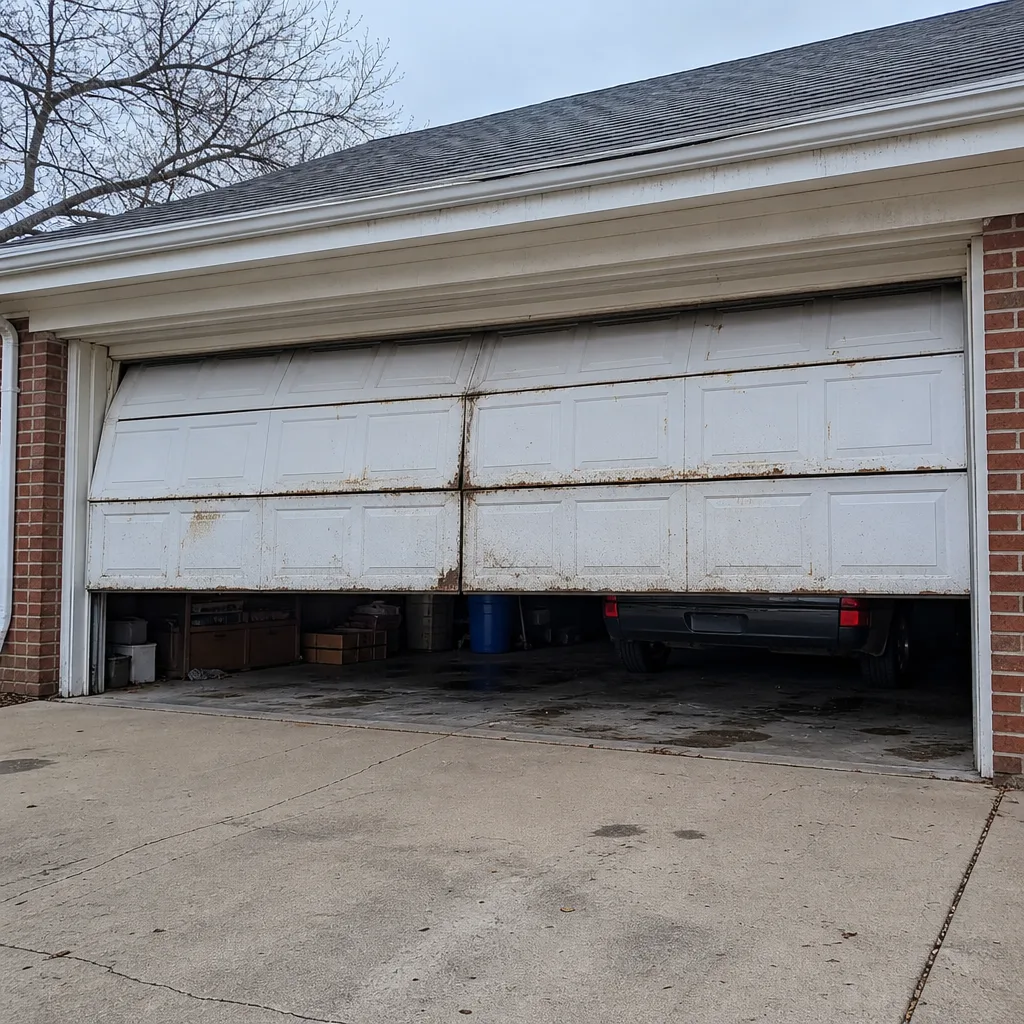 Before
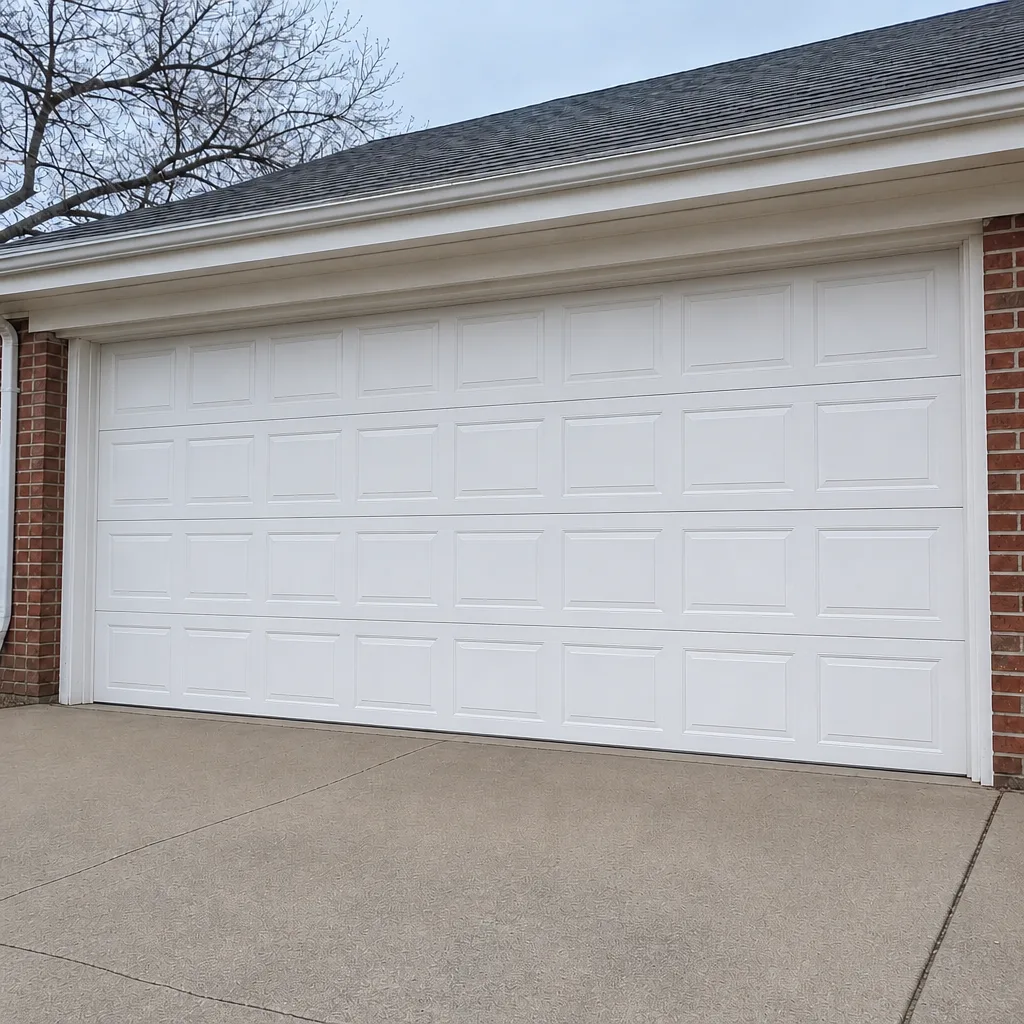 After
When to Call a Professional
Some garage door issues are genuinely DIY – replacing a remote battery, cleaning the photo-eye lens, lubricating rollers. The rest are best left to a trained specialist. Call us when the door won’t close fully or reverses for no reason, when you hear a loud snap and the door won’t lift, when the opener runs but the door stays put, or when you’re considering any replacement that involves springs, cables, or torsion hardware. These are the jobs where a wrong step can be genuinely dangerous, and where a misdiagnosis costs more than the repair. Garage Door Repair Cherry Creek offers free estimates in Cherry Creek – call (844) 621-5482 to schedule a diagnostic. We quote the price before any work starts, so there are no surprises at the end. If the call is about a door that’s stuck, a trained technician can usually tell you what’s wrong from a description of the symptoms before anyone gets in a truck.
Frequently Asked Questions
A typical residential two-car garage door in Cherry Creek costs roughly $900 to $2,800 installed, depending on material tier, insulation, window configuration, and whether the opener and hardware are replaced alongside. Entry-level steel runs at the low end; insulated mid-tier steel with windows sits in the middle; premium architectural and full-view doors reach the top. The written estimate sets the final price, and we quote it before any work starts. Call (844) 621-5482 for an exact quote – estimates are free.
Possibly. Not every property in Cherry Creek falls under an HOA covenant, and those that do usually restrict color and visible window configuration more than panel style. Pull the design guidelines document from your HOA directly rather than taking a seller’s word for what’s allowed, and submit for approval before ordering if your home is covered. That single step avoids the most expensive mistake in door replacement.
A standard residential garage door installation takes about four to six hours for a single door once the new door is on-site. Replacement doors are measured, ordered, and scheduled; the lead time depends on the manufacturer, the door spec, and the HOA approval timeline. A properly measured job fits the first time. An improperly measured job is where the return visits come from.
Often yes. Spring repair is one of our routine services and most Cherry Creek calls can be handled in a single visit; the technician needs the door’s weight and spring spec, which is checked on arrival. If the spring is a matched pair and both are worn, we typically replace both together. Call (844) 621-5482 and describe the symptoms – we can usually narrow it down before arriving.
A door that reverses immediately after closing usually has a photo-eye sensor that’s misaligned, dirty, or blocked, or a safety-reverse setting that needs adjustment. Less often it’s a door that binds and is tripping the opener’s force limit rather than the sensor. Both are quick diagnostics. If the door had a recent spring repair or opener replacement, a sensor knocked out of alignment during the job is the first thing to check.
Yes, if the garage is used daily. Most detached garages in Cherry Creek are unheated, so a single-layer steel door sweats, rusts at the seams, and warps its bottom seal over a few Denver seasons. An insulated door keeps the garage usable in cold snaps and reduces weatherstripping wear. On a detached garage, insulation is the highest-value upgrade short of a full replacement.
The Bottom Line
Garage door decisions in Cherry Creek work best when you start with the house and end with the door. Structure first – measure the opening width, height, headroom, backroom, and side room three ways before shopping. Spring and opener next – torsion vs. extension, and belt vs. chain vs. jackshaft all follow from the garage’s configuration. HOA rules third – pull the actual covenant document, not a seller’s summary. Style and material last, matched to the era of the house rather than the marketing tier. Whether you’re repairing a failing opener, replacing worn springs, or ordering a new door, our technicians have up to 12 years of experience across eight major brands, and every price is quoted and agreed before work starts. Call (844) 621-5482 for a free estimate.
Written by the team at Garage Door Repair Cherry Creek.