Last updated November 22, 2026
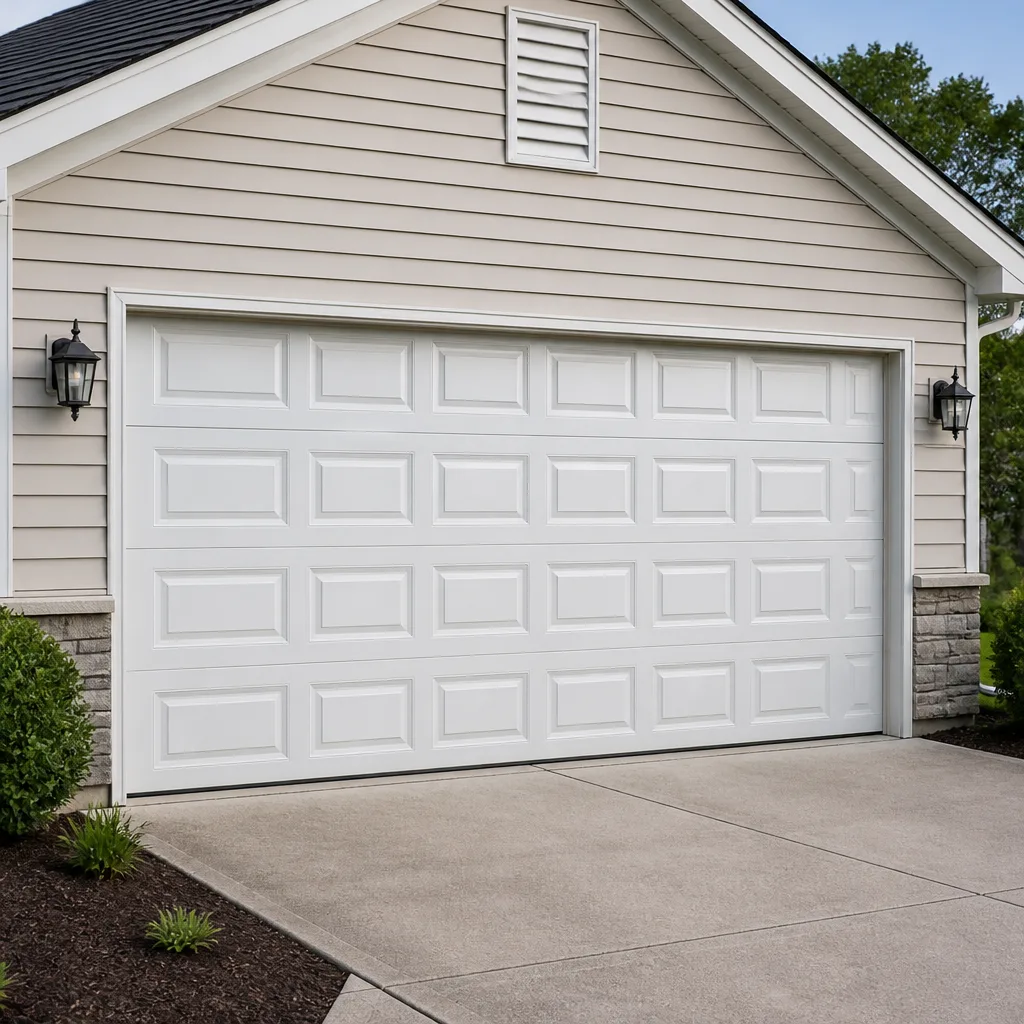 Raised-panel steel
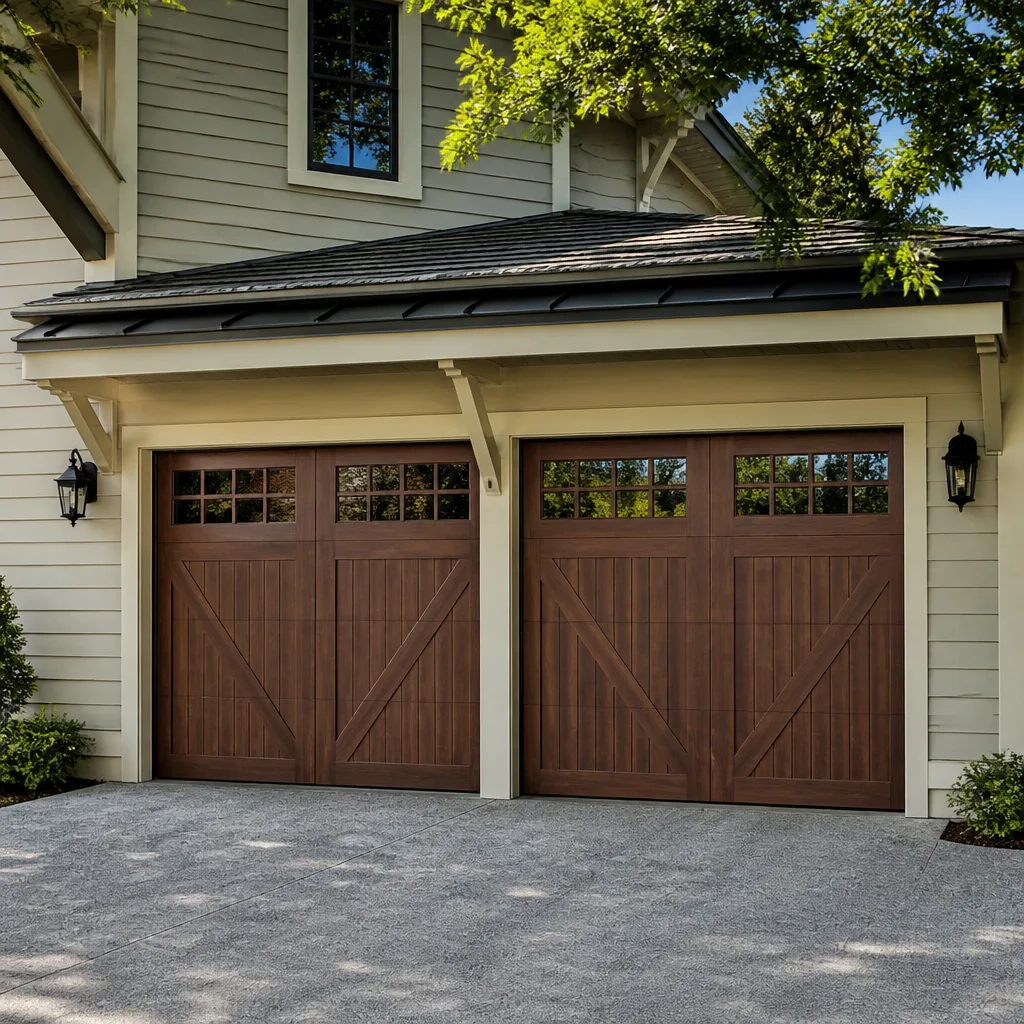 Carriage house
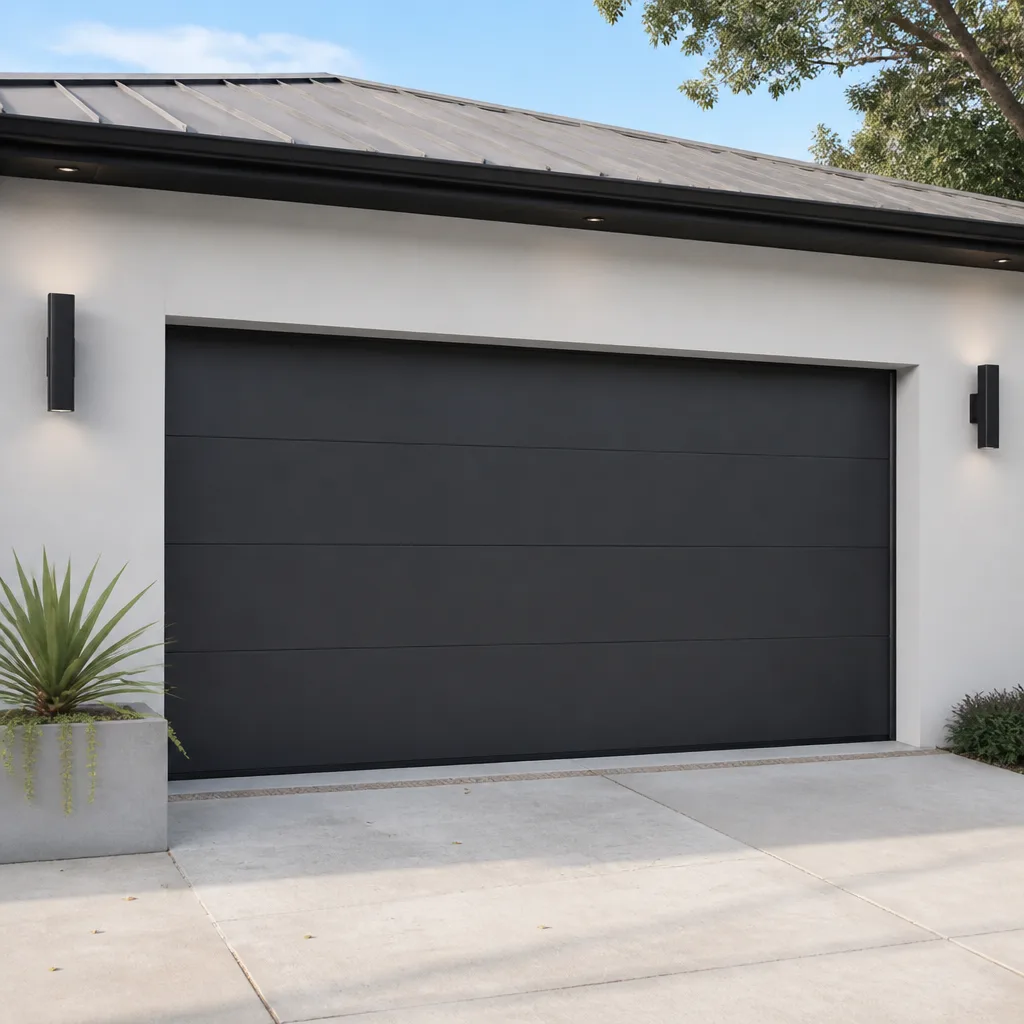 Modern flush
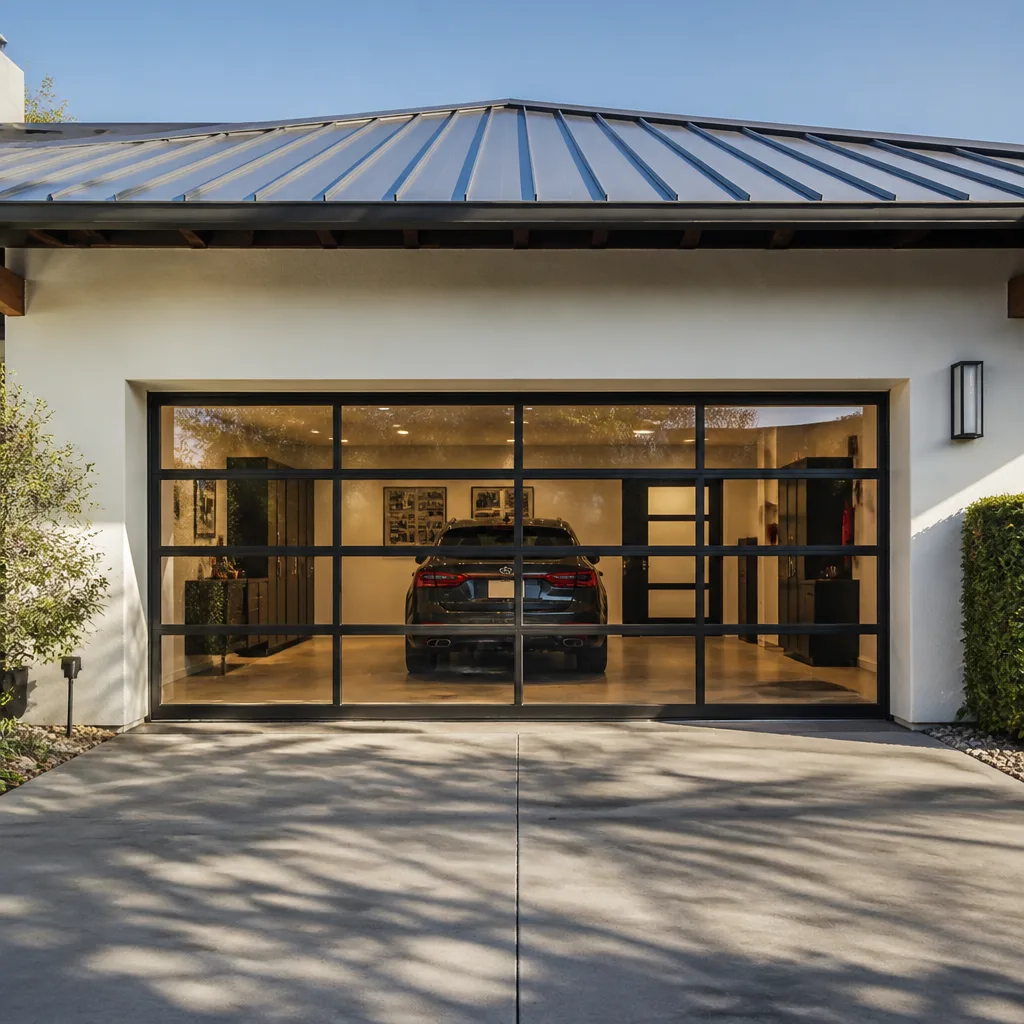 Full-view glass
 LiftMaster openers
 Chamberlain openers
Full 25-point door and opener safety check with every visit - springs, cables, rollers, tracks, and your LiftMaster or Chamberlain opener included
You get a price before we start. It does not change when the pro arrives.
Get your free estimateGarage Door Warning Signs: A Cherry Creek Homeowner’s Reference Guide
A garage door that opens slowly isn’t just annoying. It’s telling you exactly which component is about to fail, if you know how to read it. Most homeowners in Cherry Creek wait for the door to stop working entirely before they call anyone, and that waiting is what turns a small repair into an emergency. The signals are almost always there first: a slight lag at the start of travel, a rattle that wasn’t there last month, a gap where the door used to meet the floor. We’ve diagnosed enough of these in Cherry Creek to know the pattern. This guide shows you what to look for, what each sign points to, and how urgently you need to act on it.
Quick Answer
The most common garage door warning signs in Cherry Creek are a door that moves slower than it used to, grinding or scraping noises during travel, a door that reverses before closing, visible cable fraying or drum wear, and a noticeably louder opener. Each sign points to a specific component – strain in the opener, fatigue in the springs, or misalignment in the track. A slow or noisy door should be inspected within two weeks; a door with a frayed cable, a snapped spring, or a door that won’t stay up should be taken out of service today.
Styles & brands we work with
- Raised-panel steel
- Carriage house
- Modern flush
- Full-view glass
- LiftMaster openers
- Chamberlain openers
Table of Contents
- Symptom-to-Cause Index: What You’re Noticing and What It Means
- Why Is My Door Moving So Slowly?
- What Your Garage Door’s Noises Are Telling You
- The Two-Minute Cable and Drum Inspection
- Warning Signs Specific to Openers (LiftMaster and Chamberlain)
- Visual Cues: Gaps, Sagging and Track Drift
- Severity Tiers: Monitor, Schedule, or Stop Using the Door
- Cherry Creek Factors That Speed Up Wear
Symptom-to-Cause Index: What You’re Noticing and What It Means
Most garage door guides organize problems by component – springs here, openers there. That’s the way a technician thinks, not the way a homeowner notices. You notice that your door sounds different. You notice that it doesn’t sit flat. You notice a hesitation you didn’t used to feel. So this index works the other way around. Start with what caught your attention, and follow it to what’s most likely going on.
| What you notice | Most likely cause | Urgency |
|---|---|---|
| Door moves slower than it used to | Opener strain, spring fatigue, or track misalignment | Schedule within two weeks |
| Loud bang from the garage | Spring snapped | Stop using the door today |
| Grinding or scraping during travel | Track misalignment or worn rollers | Schedule within two weeks |
| Door reverses before touching the floor | Sensor misalignment or force-setting drift | Monitor, then schedule if it repeats |
| Frayed or kinked cable visible | Cable wear at the drum | Stop using the door today |
| Door sits crooked or one side lags | Cable or spring imbalance | Stop using the door today |
| Noticeably louder opener than last year | Worn gear, loose hardware, or mounting wear | Schedule within two weeks |
| Opener light flickers or sensor trips on its own | Sensor ghost-tripping or wiring | Monitor, then schedule |
Those urgency columns matter more than most homeowners realize. The difference between a modest service call and a full replacement is usually time – specifically, whether the early signal was caught before the system failed completely. A door that still opens and closes, but does it differently than it did six months ago, is exactly the door that warrants a look. In Cherry Creek, we find most of the problems in this index are easy to catch early once you know what you’re reading.
Why Is My Door Moving So Slowly?
A slow-moving garage door is the single most useful warning sign you’ll get, because three different components can produce it, and each one has a slightly different signature. If you can tell us which pattern you’re seeing, we can often narrow it down before a technician ever arrives.
Opener strain
If the door hesitates at the start, then travels at a reasonably normal pace once it’s moving, the opener is usually working harder than it should. On chain-drive and belt-drive units common to older Cherry Creek homes, this shows up as a lurch at the beginning of travel followed by a smoother run. The opener is straining against something – usually friction – and it’s the power source that’s complaining, not the door itself.
Spring fatigue
If the door is slow throughout its entire travel, and gets especially sluggish in the last foot before fully open, the springs are the more likely culprit. Torsion springs weaken gradually, so a fatigued spring produces a door that moves consistently slowly rather than lurching. Paired with a door that feels heavier than normal when you lift it by hand (with the opener disconnected, which we’ll cover below), fatigue is the leading suspect.
Track misalignment
If the door is slow on one side but normal on the other, or if the slowness comes with a slight wobble or visible tilt, the track is suspect. A track that’s been bumped, or that’s drifted out of vertical, forces the rollers to bind. That binding slows one side of the door, which then drags the other side back. This is the pattern homeowners miss most often, because it’s the easiest to write off as “the door being weird.”
Distinguishing between these three takes a couple of observations: is the hesitation at the start, throughout, or on one side? Once you’ve answered that, you can move forward with confidence. If you’re not sure, the safest step is to leave the door alone and call us. Slow doors in Cherry Creek houses are one of the fastest diagnostics we do.
What Your Garage Door’s Noises Are Telling You
Garage door sounds fall into a few broad categories, and each one points at a different part of the system. Learning to hear the difference is worth the effort, because noise is the first warning sign most homeowners can detect without even looking at the door.
- A single loud bang, then nothing. This is the classic spring-snap signature. Stop using the door immediately – a broken torsion spring means the door is supported only by the opener, which isn’t designed to carry that weight. This is a stop-using-today situation.
- Grinding or scraping during travel. Usually track misalignment, a bent roller, or a worn roller bearing. Grinding that gets worse over several days is a schedule-within-two-weeks situation.
- Rhythmic clicking or popping. Often a loose hinge or a roller that’s beginning to fail. Not urgent, but ignoring it will eventually wear the track.
- A high-pitched whine from the opener itself. Usually a worn opener gear, or the opener aging unevenly. If it’s paired with a slower door, the opener is the primary suspect.
- A rattle that’s new since last year. Loose mounting hardware or a sagging opener rail. Easy to address, worth a look before it becomes a structural problem.
None of these are dramatic on their own. But taken together, they’re the door telling you which part of the system is aging fastest. In Cherry Creek we hear all five regularly, and the pattern almost always points to one clear cause once a technician is on site.
If your door is grinding or popping, it’s worth having the mechanism checked before the noise turns into damage. Our garage door repair work starts with a diagnosis, so you know exactly what you’re dealing with before anything gets replaced.
The Two-Minute Cable and Drum Inspection
The cables and drums on a torsion-spring door are the most common source of catastrophic failure, and they’re also the easiest part of the system to inspect quickly. Two minutes at the side of the door, with the door closed and no one operating it, will tell you most of what you need to know.
- Look at the cables, not the springs. On each side of the door there’s a steel cable running from the bottom bracket up to the drum above. Look at the whole length. A healthy cable is straight, tight, and uniformly smooth.
- Check for fraying. A cable with visible broken strands, kinks, or a rough look near the drum is a stop-using-today signal. Frayed cables can snap without warning, and a snapped cable lets the door drop on one side.
- Look at the drums. On a torsion door, the drums sit above the door on each side. The cable should be wound neatly around the drum with no overlap, no slack hanging free, and no visibly worn grooves. A drum that’s been re-wound badly can let the cable jump out.
- Check the bottom brackets. The cable attaches to the door at a bottom bracket. Look for cracking, rust, or anything that suggests the bracket is stressed. Never touch these brackets – they’re under high tension – but you can look.
- Close the door and watch the cables for the first foot. Operate the door normally and watch only the cables during the first foot of travel. Any uneven pull, any wobble in the cable, any sign that one side is taking the load first, is worth flagging.
The safety caveat here is important and non-negotiable. Cables and springs on a torsion system are under high tension even when the door is closed and appears inert. Do not attempt to tighten, adjust, or remove them yourself. This is the part of a garage door system that injures DIYers most often, and the work is not a homeowner task. What you’re doing with this inspection is gathering information for a trained professional, not attempting the repair.
If anything in that five-step sequence looks off, stop using the door and call us. Cables that are still intact are cheap to replace; cables that have snapped mid-travel are not.
Warning Signs Specific to Openers (LiftMaster and Chamberlain)
Openers fail differently from the door itself, and their warning signs are easy to miss because the opener usually doesn’t produce catastrophic failures – it produces annoyances that gradually become real problems. The two most common opener warning signs we see in Cherry Creek homes are force-setting drift and sensor ghost-tripping.
Force-setting drift
Modern openers (including most LiftMaster and Chamberlain units) measure how much resistance they encounter as they move the door. If the door gets slightly heavier – spring fatigue, track friction, cold weather stiffening the grease – the opener compensates by pushing harder. That compensation is called the force setting. The problem is that the force setting gradually drifts upward to accommodate the added strain, which works for a while, and then one day the opener encounters real resistance (someone in the way, an obstruction) and doesn’t stop as quickly as it should. If you’ve noticed that your door “feels” like it’s pushing through the last foot harder than it used to, that’s force-setting drift. A technician can check the force setting and flag if it’s out of range.
Sensor ghost-tripping
The safety sensors at the bottom of the door should only trip when something is actually between them. If your door reverses before touching the floor intermittently – maybe once every few days, maybe only on cold mornings – the sensors are ghost-tripping. Common causes are misalignment, sun glare, dust on the lens, or a loose wire. On LiftMaster and Chamberlain units specifically, the LED indicator on the sensor will tell you which side is having trouble: solid on one, blinking on the other is a standard diagnostic. Ghost-tripping is annoying but not dangerous on its own; the danger is that it masks a real sensor failure when it happens.
Other opener warning signs
- Opener light flickers or dims noticeably during travel.
- Remote range drops – you have to be closer to open the door.
- The opener runs but the door doesn’t move, or moves slowly and unevenly.
- A high-pitched whine from the opener housing, especially at start-up.
- Wall control intermittently doesn’t respond.
We’re trained on LiftMaster and Chamberlain units specifically, along with Genie and Craftsman models, so the quirks of each system are familiar before we arrive. If your opener is showing any of these signs, garage door opener repair is the right first step. Don’t wait for the opener to fail entirely – the failure mode on openers is rarely gentle.
Visual Cues: Gaps, Sagging and Track Drift
Some warning signs are purely visual, and they’re easy to spot if you know where to look. These are the ones homeowners most often miss because they don’t notice a change until the door is visibly failing.
Gaps around the door
Stand inside your garage with the door closed and look at the perimeter. A door that used to sit flush against its weatherstripping, and now has a visible gap at the bottom, top, or sides, is a door that’s drifted. The gap itself is minor; what it indicates isn’t. A gap at the bottom usually means the door isn’t fully closing, which is often a sensor or force-setting issue on the opener. A gap on one side usually means the door is out of level, which points to spring or cable imbalance. Either way, the gap is your early warning.
Sagging panels
Look at the horizontal seams between panels. A door that used to be a clean flat surface, and now has one panel that bows slightly, or seams that don’t line up cleanly, has either a damaged panel or a hinge/track issue pulling it out of alignment. A sagging panel is a schedule-within-two-weeks signal, especially on steel doors (Clopay and Amarr models common in Cherry Creek are prone to panel flex when the underlying mechanism is off).
Track drift
The vertical tracks on each side of the door should be straight from top to bottom when you sight down them. If one track bows inward or outward at any point, or the gap between the door edge and the track is wider at the top than at the bottom, the track has drifted. Track drift is caused by something – a bump, worn rollers, or a warped door – so treating just the track usually doesn’t solve it.
Bottom seal and hinges
The bottom rubber seal is what keeps weather out. A seal that’s cracked, torn, or no longer making contact when the door is closed means the door is either not traveling all the way down or the seal is worn out. Hinges that show rust streaks or visible cracking are cosmetic until they aren’t – a hinge that fails under the tension of the door can cause a panel to bind.
If you’re seeing several of these together, don’t wait for the door to fail. A visual inspection now is the cheapest version of this problem you’ll get. Wayne Dalton and Craftsman doors in Cherry Creek often show these cues earlier than other brands, so if that’s what you have, it’s worth a look every few months.
Severity Tiers: Monitor, Schedule, or Stop Using the Door
Every warning sign in this guide falls into one of three categories, and knowing which one you’re in is the difference between a routine repair and an after-hours emergency. Here’s how we categorize, in plain language.
Tier 1: Monitor it
These are signs that are real but not urgent. Keep an eye on them, note how they change over a few weeks, and schedule a visit if they get worse or if more signs show up alongside them.
- Slight new rattle or ticking.
- Occasional sensor ghost-trip (once a week or less).
- Opener light flickers but everything works.
- Remote range slightly reduced.
- Cosmetic rust or minor seal wear.
Tier 2: Schedule within two weeks
These are signs that indicate a component is wearing faster than it should, and waiting more than a couple of weeks risks secondary damage to the track, panels, or opener.
- Door moving slower than usual (any pattern).
- Grinding or scraping during travel.
- Frequent sensor ghost-trip (several times a week).
- Opener whine or louder operation than last year.
- Visible sagging panel or seam misalignment.
- Bottom seal no longer making contact.
- Force-setting drift.
Tier 3: Stop using the door today
These are the signs that indicate the door is at risk of failing during operation. Do not run the opener. Manually lift the door with the release cord only if you can do so safely, otherwise leave it closed and call us.
- Loud bang followed by a door that won’t open.
- Visible frayed, kinked, or slack cable.
- Door sitting crooked or one side visibly lower.
- Broken or visibly snapped torsion spring.
- Door that falls freely or won’t stay up.
- Track visibly bent or collapsed.
Tier 3 problems in Cherry Creek are the ones we most often wish we’d heard about a week earlier. Early detection moves almost every Tier 3 sign into Tier 2, and almost every Tier 2 sign into a smaller, faster repair.
Cherry Creek Factors That Speed Up Wear
Cherry Creek homes see a specific pattern of garage door wear that’s worth knowing about, because knowing the local conditions helps you predict what your door is likely to fail at, and when.
First, the front range’s temperature swings. Cherry Creek sits where winter mornings can dip well below freezing and afternoon thaws are common. That cycle works the metal components harder than a stable climate would. Springs fatigue faster when they’re expanding and contracting through that kind of range, and grease in the opener and rollers thickens when the temperature drops, which puts the opener in a position where it’s forcing through stiff grease on cold mornings. Cold-weather force-setting drift is a real thing here, and it’s why we recommend checking the opener force setting before the first hard freeze.
Second, the dry air. Cherry Creek’s climate is dry most of the year, which is actually easier on metal than coastal humidity would be, but it’s harder on the wooden door frames and weatherstripping around the opening. Dried-out weatherstripping cracks and pulls away, letting in cold air, moisture during storms, and dust. When the weatherstripping fails, the door loses its cushion against the frame, which puts added wear on the hinges and the bottom bracket.
Third, the housing stock. Cherry Creek has a mix of older homes with original wooden or single-panel doors and newer homes with steel doors from Clopay, Amarr, or Wayne Dalton. Older doors are more prone to panel flex and cable wear at the drums; newer steel doors tend to show issue earlier at the hinges and rollers, but fail less dramatically when they do. Both benefit from the same two-minute inspection routine we covered above.
Split-face blocks, tight alleys, and short driveways mean a lot of Cherry Creek garage doors get bumped more than average. Track drift is more common here than in neighborhoods with long, wide driveways, and it almost always shows up first as a slow door before it shows up as a visible bow.
Common Mistakes to Avoid
- Waiting for the door to stop working. A door that “just feels off” is doing you a favor by still moving. The repair is cheaper when the door is still working. In Cherry Creek, we see this pattern more than any other.
- Lubricating the springs thinking it solves the slow-door problem. Spring fatigue is a metal-wear issue that lubrication doesn’t touch. If anything, lubricant on the springs can attract dust and grit that speeds the wear.
- Adjusting the opener’s force setting yourself. Force-setting drift is a real diagnostic signal, not a knob to turn up. Raising the force setting to “make it work” hides the underlying problem and defeats the safety mechanism.
- Treating track drift as a track problem. The track drifted for a reason – a bump, a worn roller, or a warped door. Straightening just the track fixes the symptom, not the cause, and it’ll drift again.
- Ignoring a single loud bang. A bang from the garage, followed by a door that “still works,” is usually a spring that broke on one side of a pair. The other spring is now carrying double the load and will fail soon after. Stop using the door and call us.
- Assuming a new door is cheaper than a repair. Most warning signs in this guide are repairable in under an hour of technician time. A new door only becomes the right call when the door itself is warped beyond adjustment, the opener is failing repeatedly, or an older wooden door has structural damage. Ask for an honest diagnosis, not a sales pitch.
- Skipping the cable inspection because the door “looks fine.” Cables fail without warning, and a frayed cable looks normal from three feet away. The two-minute inspection we covered above is the single highest-value thing you can do as a homeowner.
See the difference
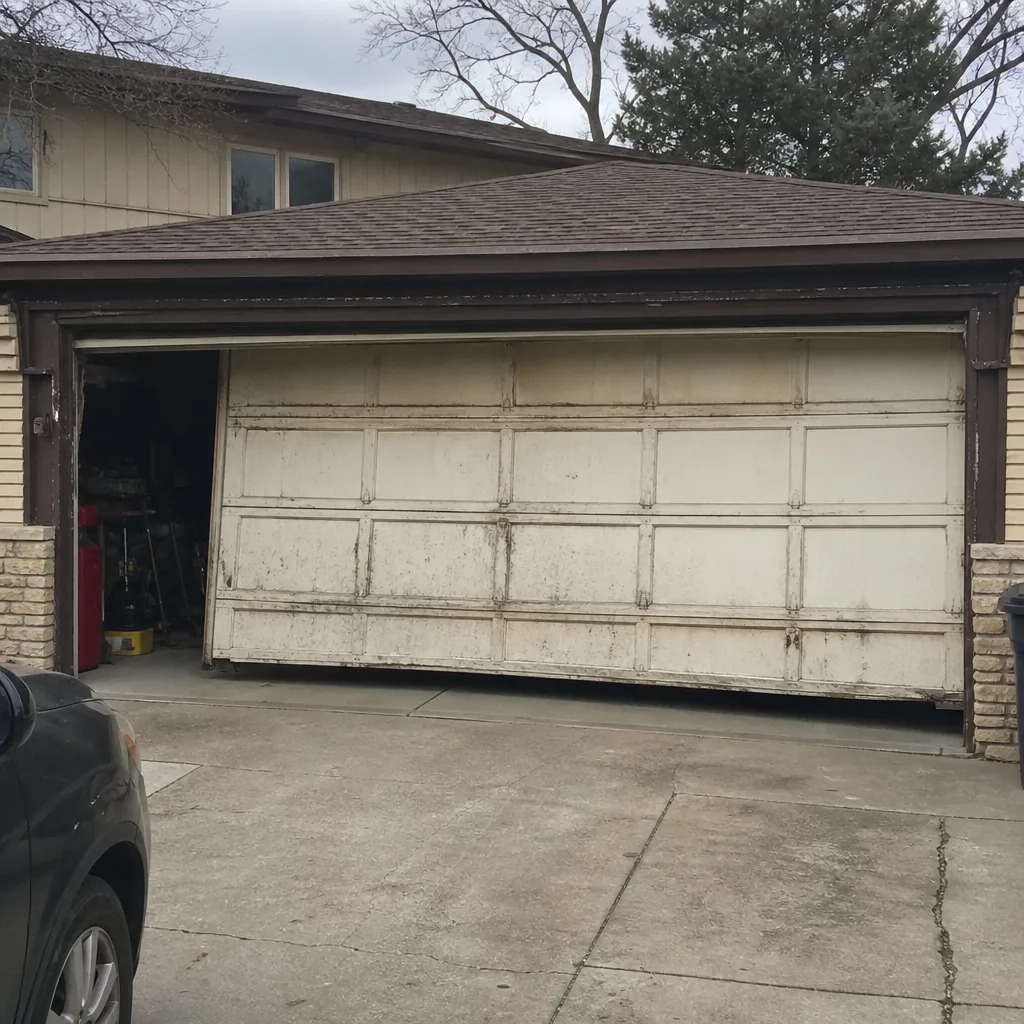 Before
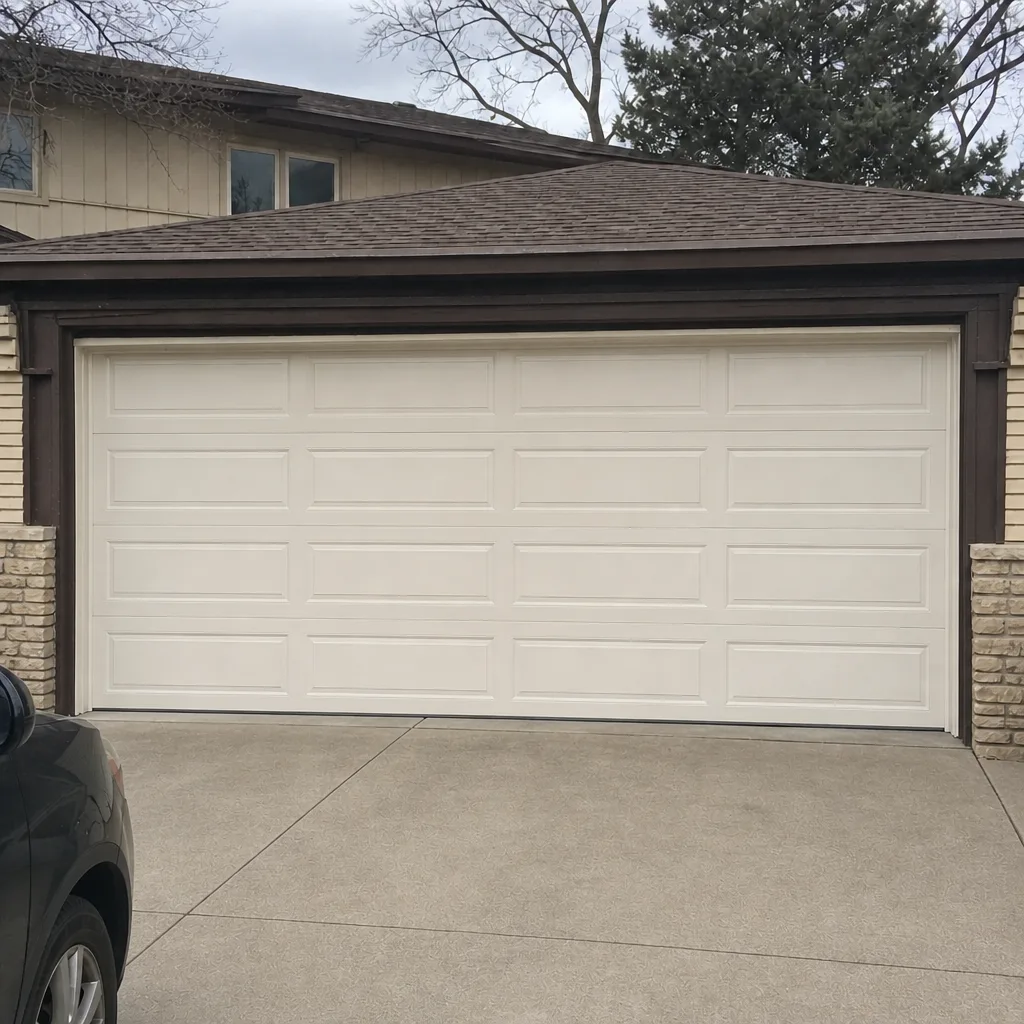 After
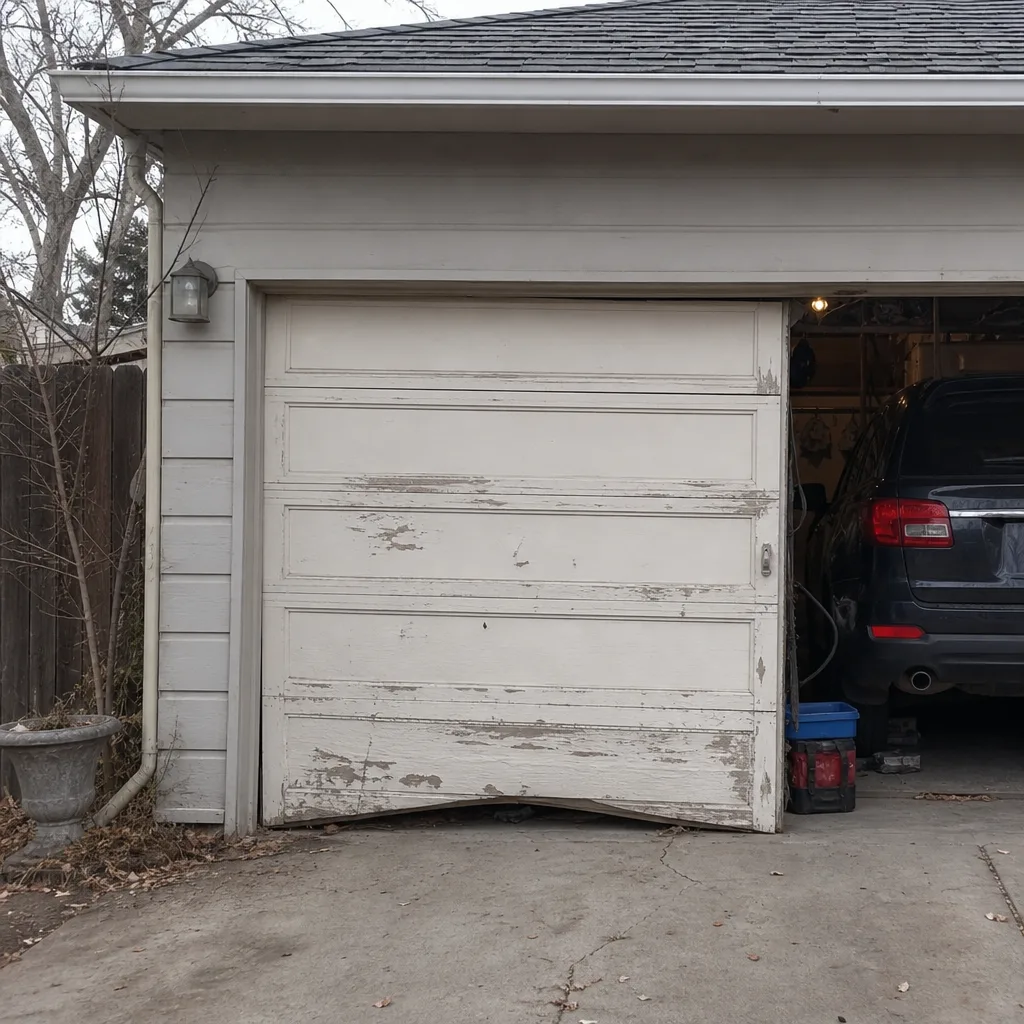 Before
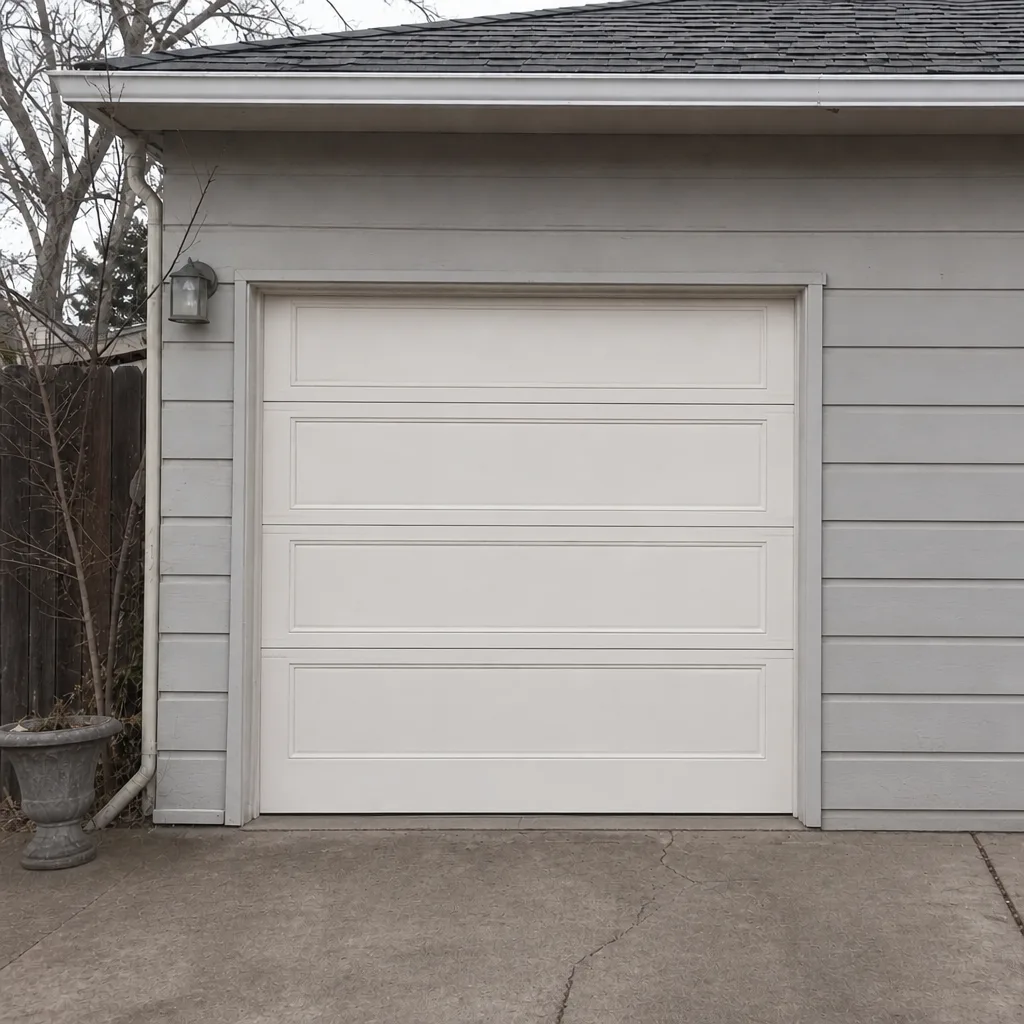 After
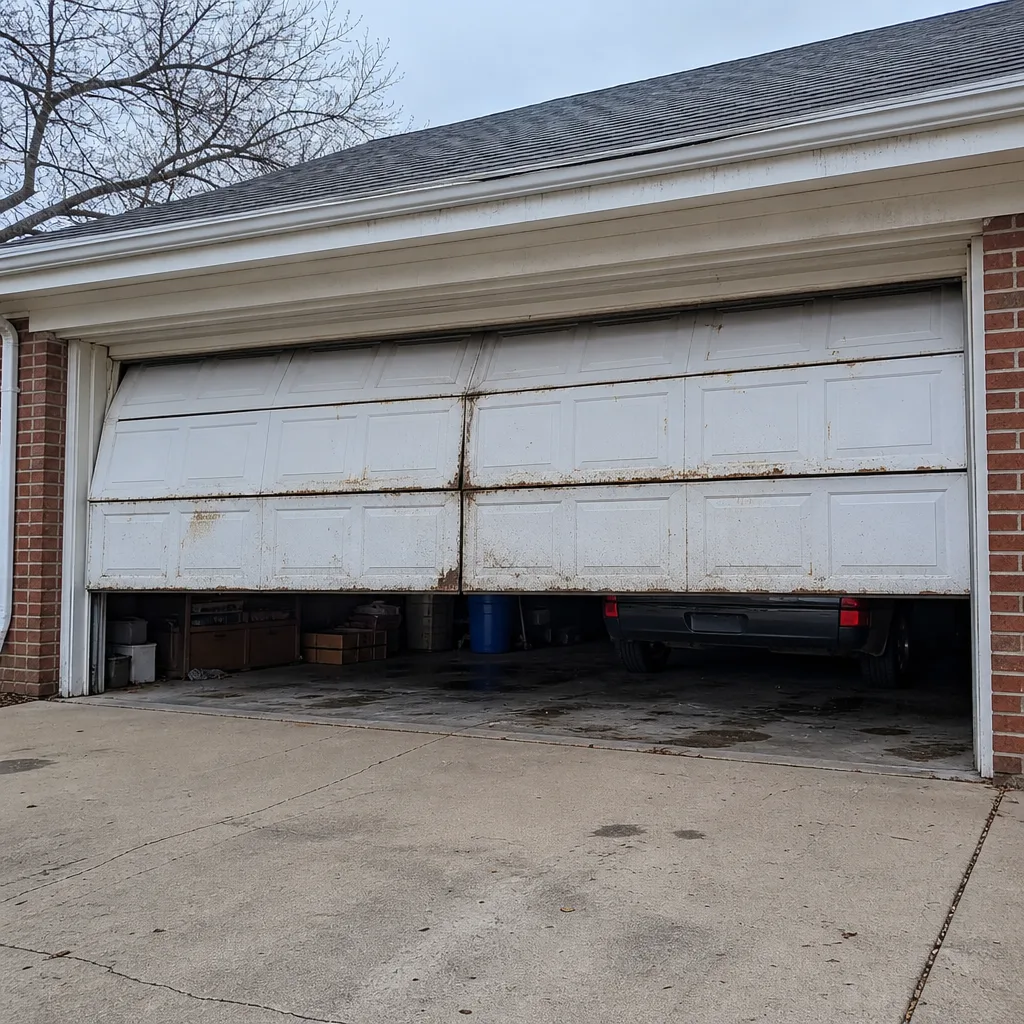 Before
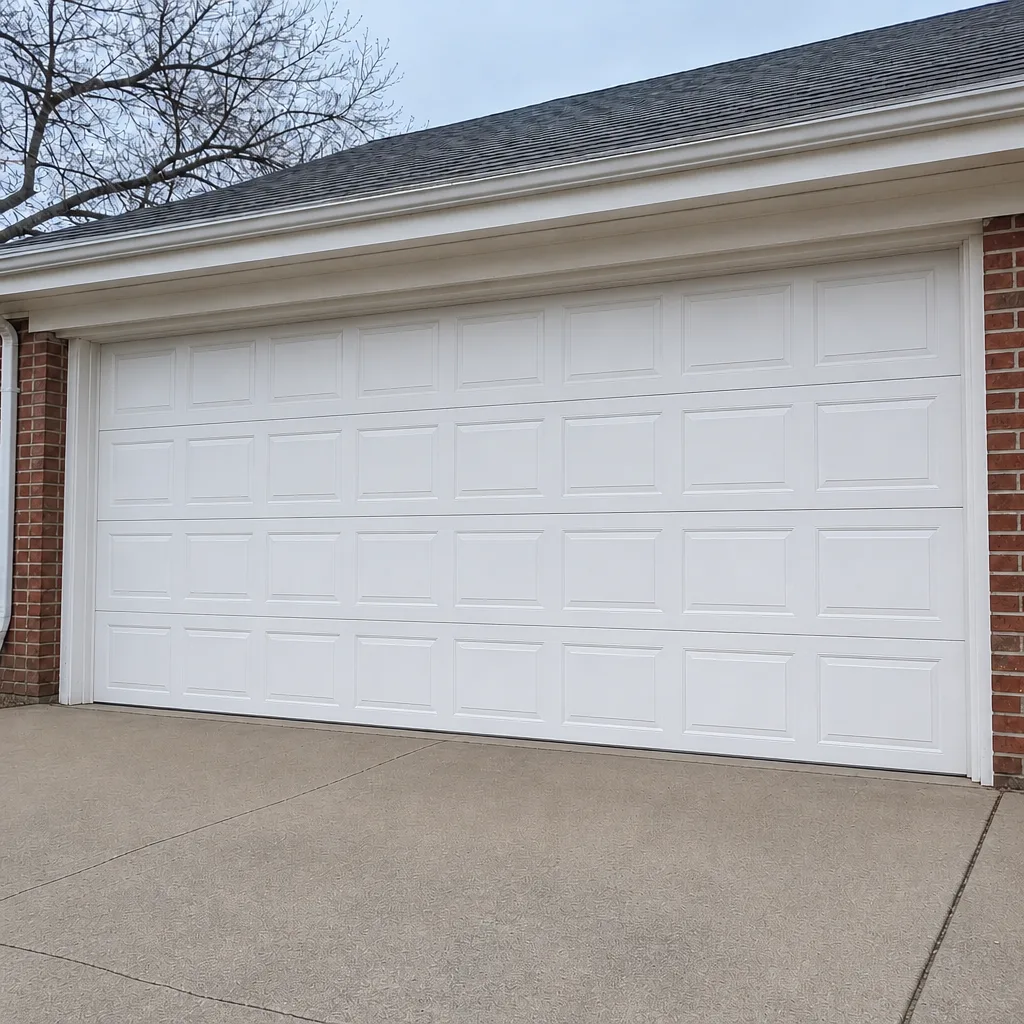 After
When to Call a Professional
The signs in this guide are the ones we can help you interpret quickly over the phone, but a few scenarios should prompt a call regardless of how minor they seem. A door that’s been getting slower for a month. A noise that wasn’t there last season. A gap you can see light through when the door is closed. A sensor that trips more than once a week. A cable that looks anything other than straight and smooth. Any of these warrant a diagnosis, and the earlier we get to the problem, the simpler and less expensive the fix usually is.
If you’re not sure where a sign lands on the severity scale, that’s also a good reason to call. Our technicians are trained on the eight major brands – LiftMaster, Chamberlain, Genie, Clopay, Amarr, Wayne Dalton, Craftsman, and Raynor – so whether your door is a new Clopay steel model or an older wooden door, they’ll know the system before they arrive. We keep parts in stock for the brands we service, which means a diagnosis and a repair can often happen on the same visit instead of waiting on a manufacturer order. For a full door replacement, we’ll come out for a free measure and a written price before anything gets ordered. Garage Door Repair Cherry Creek offers free estimates in Cherry Creek – call (844) 621-5482.
Frequently Asked Questions
The most common warning signs we see in Cherry Creek are slow door travel, new grinding or scraping noises, and intermittent sensor ghost-tripping. Frayed cables and visible track drift are less common but more urgent. Cherry Creek’s temperature swings in particular tend to drive spring fatigue and cold-weather opener strain, so those two show up more here than in milder climates.
Typical garage door repairs in Cherry Creek run from a modest service call for adjustments and diagnostics to a larger ticket for spring or cable replacements, depending on what’s failing and what brand of door and opener you have. Because we quote before any work starts, the written estimate you get is the price you pay. Call (844) 621-5482 for an exact quote – estimates are free.
Many repairs can be handled same-day, especially when the parts are in stock. Spring and cable replacements are common enough that we usually have what’s needed. For a full door replacement or a custom measure, we’ll schedule a separate visit for the measure and order – that work can’t be compressed into a same-day call. Call (844) 621-5482 and we’ll tell you honestly how quickly your situation can be handled.
No – the written estimate you agree to before any work starts is the price. If a technician discovers something the initial diagnosis didn’t catch, we’ll stop and re-quote before proceeding, so there’s no scenario where the invoice exceeds the quote without your approval. Call (844) 621-5482 for an estimate – estimates are free.
The local professionals we connect you with are licensed and insured as their state requires. Our own technicians are trained on the eight major garage door brands – LiftMaster, Chamberlain, Genie, Clopay, Amarr, Wayne Dalton, Craftsman, and Raynor – and have up to 12 years of experience. Call (844) 621-5482 to schedule a diagnostic visit.
No. A slow door can be caused by opener strain, spring fatigue, or track misalignment, and each one produces a slightly different pattern. Hesitation at the start usually points to opener strain; slow travel throughout points to spring fatigue; slowness on one side points to track misalignment. If you’re not sure which pattern you’re seeing, call us and we’ll help narrow it down.
The Bottom Line
The warning signs that matter most are the ones that show up while the door still works. A slow door, a new noise, a visible gap, a sensor that trips more often than it should – each one tells you which component is aging fastest, and each one gives you time to fix it before it becomes an emergency. Read the symptom-to-cause index, learn the two-minute cable inspection, and know which signs land in the stop-using-today tier. In Cherry Creek, catching a sign two weeks early usually means the difference between a simple repair and a much larger one. If any sign on this page looks familiar, don’t wait for the door to fail before you call (844) 621-5482 for a free estimate.
If you’re also thinking about a new door rather than a repair, our garage door installation work starts with a free measure and a written price, and you can read more about how we handle repair work in Cherry Creek on our Garage Door Repair Cherry Creek page.
Written by the team at Garage Door Repair Cherry Creek.